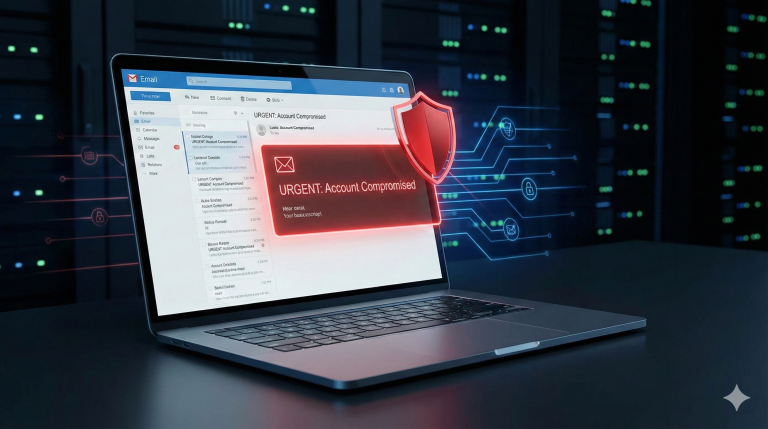


Cybersecurity is no longer only a technical topic. It is a business risk. Still, many companies believe they are already “secure enough”. They use antivirus software, have a firewall, and rely on cloud services. This creates a feeling of safety – but often not real security. Daily business operations depend heavily on digital systems, email communication, and online services. At the same time, security is often treated as something that runs quietly in the background, as long as nothing goes wrong.
Most cyber incidents today do not happen because of highly complex attacks. They happen because of basic mistakes that are well known, but still ignored. The same weaknesses appear again and again, especially in small and medium-sized companies. This article explains the most common cybersecurity mistakes companies still make – and why they are so dangerous.
1. Underestimating the Threat
One of the most common and most dangerous cybersecurity mistakes is underestimating the real level of threat. Many companies still believe that cyberattacks are rare events or something that mainly affects large corporations with well-known brands. This assumption creates a false sense of security. In reality, size does not protect a company. Small and medium-sized businesses are often targeted precisely because they appear less prepared. They usually have fewer security controls, less monitoring, and limited internal resources. From an attacker’s perspective, this makes them attractive targets.
Another problem is the belief that past safety means future safety. Companies that have never experienced a serious incident often assume their current setup is sufficient. They trust that “nothing has happened so far”, without considering that threats, tools, and attack methods constantly change. Cybercriminals do not need a personal reason to attack a company. Most attacks are automated. Systems are scanned continuously for open ports, outdated software, weak credentials, or misconfigured cloud services. If a weakness is found, it is exploited – regardless of the company’s size, industry, or location.
Underestimating the threat also leads to delayed decisions. Security improvements are postponed, awareness training is seen as optional, and clear responsibilities are not defined. These delays increase the risk over time. Taking cybersecurity seriously does not mean expecting the worst every day. It means understanding that attacks are part of today’s digital reality and preparing accordingly. Awareness is the foundation of effective cybersecurity.
2. Weak Password Practices
Weak password practices remain one of the easiest ways for attackers to gain access to company systems. Despite years of warnings, passwords are still often treated as a minor detail instead of a critical security control. In many organizations, employees reuse the same password for multiple services. Email accounts, cloud platforms, internal tools, and even administrative systems are sometimes protected by identical or very similar credentials. If one of these services is compromised, attackers can quickly access others without much effort.
Another common issue is the use of simple and predictable passwords. Company names, personal information, keyboard patterns, or short combinations are still widely used. These passwords can be guessed or cracked within seconds using automated tools. Shared accounts also increase the risk significantly. When several people use the same login credentials, it becomes impossible to track who accessed what and when. This not only weakens security, but also makes incident response and investigation much harder.
Passwords are often stored insecurely as well. They may be written down on paper, saved in unprotected documents, or shared via email or messaging apps. In these cases, attackers do not even need technical skills – simple access to the information is enough. Strong password rules, unique credentials, and basic access management are not advanced security measures. They are fundamental. Ignoring them leaves the door open for avoidable attacks.
Many companies try to solve password problems by introducing a password manager. While this can be helpful, it does not automatically eliminate risk. Secure access requires clear rules, awareness, and responsibility, not just another tool, as explained in The Truth About Password Managers: Security Requires More Than a Tool.
These recurring weaknesses are especially risky for small and medium-sized businesses, as they often connect directly to emerging threat patterns. A closer look at upcoming risks is outlined in The 6 Cyber Threats Every Small Business Must Prepare for in 2026.
3. Lack of Employee Awareness
A lack of employee awareness is one of the most underestimated cybersecurity risks. Many companies invest in technical security tools, but forget that people are often the first point of contact for an attack. Cybercriminals know this. Instead of attacking systems directly, they target employees with phishing emails, fake invoices, or messages that create urgency or pressure. These messages are designed to look normal and trustworthy. Without proper training, even experienced employees can fall for them.
In many organizations, employees receive little or no cybersecurity training. Some may have attended a short session years ago, but threats and attack methods change constantly. Without regular updates, knowledge quickly becomes outdated. Another problem is the assumption that awareness training is only for non-technical staff. In reality, everyone in a company uses email, cloud services, and digital tools. One careless click can be enough to compromise an entire system.
Employees are often afraid of making mistakes and being blamed. This leads to incidents being reported too late or not at all. A strong security culture encourages early reporting and open communication instead of fear. Cybersecurity awareness is not about turning employees into security experts. It is about helping them recognize unusual situations, ask questions, and react correctly. Well-informed employees are not a weakness – they are a critical layer of defense.
4. Missing or Untested Backups
Backups are often mentioned in security discussions, but in practice they are frequently neglected. Many companies believe they are protected because backups exist somewhere in the system. The problem usually becomes visible only after an incident occurs. A common mistake is assuming that backups automatically work. In reality, backups are often outdated, incomplete, or never tested. Data may be backed up irregularly, important systems may be excluded, or backup jobs may fail without anyone noticing.
Another serious issue is the storage location of backups. In some cases, backups are kept on the same network or system that later gets attacked. During a ransomware incident, attackers encrypt not only live data but also connected backups. This leaves the company without any recovery option. Time also plays a critical role. Even when backups exist, restoring them may take much longer than expected. Companies realize too late that recovery procedures were never defined or tested. Business operations can be interrupted for days or even weeks.
Backups are not just a technical task. They are part of business continuity. Without reliable backups, even a small incident can turn into a major business disruption. A backup is only valuable if it is current, protected, and restorable. Anything else creates a false sense of security.
Many companies only discover these weaknesses during an incident, when recovery is already urgent. This situation is more common than expected and shows why backups alone are not enough, as described in Backup Exists – But Data Cannot Be Restored When It Matters Most
5. Outdated Systems and Delayed Updates
Outdated systems are one of the most common and most avoidable security risks. Many companies delay updates because they fear disruptions, compatibility issues, or downtime. As a result, critical patches are postponed again and again. Cybercriminals actively search for known vulnerabilities in software and operating systems. Once a vulnerability becomes public, attackers often start exploiting it within a short time. Systems that are not updated quickly become easy targets.
Another issue is the use of unsupported software. Older operating systems or applications may no longer receive security updates at all. This means known security gaps remain open permanently, even if other parts of the system are protected. Updates are often seen as an IT inconvenience instead of a security requirement. In reality, patch management is a basic part of cybersecurity. It reduces risk more effectively than many advanced tools.
Without a clear update process, companies lose visibility. They do not know which systems are up to date and which are not. This creates hidden risks that may remain unnoticed for a long time. Keeping systems updated does not guarantee complete security, but ignoring updates almost guarantees exposure. Regular updates are one of the simplest and most effective protective measures.
Outdated systems are often treated as a technical inconvenience instead of a real security risk. In practice, unpatched and unsupported software creates predictable entry points for attackers. This is a growing issue that many companies underestimate, as explained in When Outdated IT Becomes a Security Risk – What Your Company Needs to Know.
6. No Clear Responsibility for Security
In many companies, cybersecurity has no clear owner. It is often assumed that security is “handled by IT” or fully covered by an external service provider. As a result, responsibility becomes unclear and fragmented. Without defined roles, important security tasks fall through the cracks. Policies are missing or outdated, access rights are not reviewed regularly, and incidents are handled inconsistently. When a problem occurs, it is often unclear who should act first or who has decision-making authority.
Another common issue is that cybersecurity is not included in management discussions. It is treated as a technical topic instead of a business risk. This leads to delayed decisions and missing resources, even when risks are known. Outsourcing security does not remove responsibility. External providers can support technical tasks, but internal ownership is still required. Someone within the company must understand the risks, coordinate measures, and ensure accountability.
Clear responsibility creates structure. It enables consistent processes, faster reactions, and better communication during incidents. Without it, even well-designed security measures lose their effectiveness. Cybersecurity needs leadership. When responsibility is clearly defined, security becomes manageable instead of reactive.
7. Believing Tools Alone Are Enough
Many companies believe that buying security tools automatically makes them secure. Antivirus software, firewalls, endpoint protection, and cloud security services are important, but they are often misunderstood as a complete solution. Security tools can only protect what they are configured to protect. If they are poorly set up, outdated, or ignored, their effectiveness is limited. Alerts may be overlooked, settings remain at default levels, and responsibilities for monitoring are unclear. Another common problem is tool overload. Companies use multiple security products without a clear strategy. This creates complexity and gaps. Important signals are missed because no one has a clear overview of what really matters.
Cybersecurity is not a single product. It is a process that combines technology, people, and clear procedures. Tools support this process, but they cannot replace awareness, responsibility, and structured decision-making. When companies rely only on tools, they often react too late. Security becomes visible only after something goes wrong. A preventive approach requires more than software. Effective cybersecurity is built on understanding risks, defining processes, and supporting people with the right tools. Without this foundation, even advanced technology cannot provide real protection.
Many of these issues will become even more critical in the coming years as attack methods continue to evolve. A closer look at upcoming developments shows how today’s basic mistakes connect directly to future business risks, as explained in Cybersecurity 2026: The Biggest Risks for Businesses – and How to Protect Your Company.
Conclusion: Common cybersecurity mistakes companies make
Most cybersecurity incidents are not caused by sophisticated attacks or advanced technology. They happen because of basic mistakes that remain unaddressed over time. Underestimating risks, weak passwords, untrained employees, unreliable backups, outdated systems, unclear responsibilities, and an overreliance on tools all create unnecessary exposure. These issues are not signs of bad management or poor intentions. They are often the result of daily business pressure, limited resources, and the assumption that existing measures are sufficient. However, cyber risks do not stand still. What was acceptable a few years ago is often no longer enough today.
Effective cybersecurity does not require perfection. It requires awareness, structure, and consistency. Clear responsibilities, realistic risk assessment, and simple but reliable processes reduce risk significantly. Cybersecurity is not a one-time project. It is an ongoing responsibility that supports business stability, trust, and continuity. Companies that address these common mistakes early are better prepared for the digital challenges ahead.
If you have questions or would like to discuss your situation, the easiest way to contact me is via LinkedIn. Feel free to send me a direct message.