

A new year is a good moment to pause and look at what really matters. Many companies review goals, plans, and risks and think about what should improve in the months ahead. This also makes it a good time to ask a simple but important question: How prepared is your company for cyber attacks?
First of all — Happy New Year. Not as a formality, but as a reminder that the start of the year is a chance to gain clarity, not to create pressure. Cybersecurity is one of those topics that benefits from a calm and realistic view.
In many companies, cybersecurity develops step by step. New tools are added, access rights change, and routines grow over time. Often, these changes are not reviewed regularly. Because of this, there can be a gap between how secure a company feels and how prepared it really is.
This article is not about fear or technical details. It is about understanding where a company stands today. A cybersecurity reality check is not an audit. It is a simple, honest look at structures, responsibilities, and readiness. Starting the year with this clarity helps companies move forward with confidence. And confidence is the basis of sustainable security.
Why holidays are a high-risk period for cyberattacks
Cybersecurity does not follow the calendar, and threat actors do not pause their operations simply because it is Christmas, New Year’s Eve, or a public holiday. In fact, holiday periods are often deliberately chosen because they create conditions that make successful attacks more likely.
During holidays, many organizations operate with reduced IT and security staffing. Monitoring systems may still be active, but fewer people are available to review alerts, investigate anomalies, or escalate incidents quickly. As a result, early warning signs that would normally trigger a response can go unnoticed for hours or even days.
At the same time, working patterns tend to change. Employees may rely more heavily on remote access, personal devices, or home networks that are not subject to the same security controls as office environments. Temporary workarounds become more common, and established routines are relaxed in favor of convenience.
Public holidays also provide longer time windows for attackers. If initial access is gained during this period, there may be extended time to move laterally through systems, escalate privileges, deploy malware, or exfiltrate data before normal operations resume. What could have been a contained incident during regular business hours can quietly develop into a serious compromise.
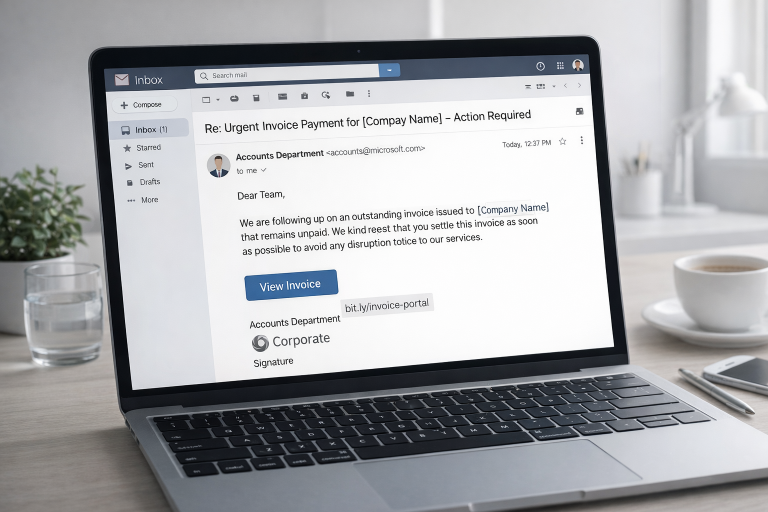
This is why ransomware campaigns, phishing waves, and credential-harvesting attacks are frequently launched during holiday periods. Attackers understand that delayed detection often leads to delayed response, and delayed response significantly increases impact, cost, and recovery time. Holidays do not create new threats, but they reduce visibility — and reduced visibility is exactly what attackers look for.
Why perceived security and actual preparedness often differ
Many companies genuinely believe they are reasonably well protected. Firewalls are in place, antivirus solutions are installed, and backups exist in one form or another. These measures are important and necessary, but on their own they often create a sense of reassurance that does not fully reflect reality. Security tools provide protection only when they are part of a broader, well-defined framework of processes, responsibilities, and regular review.
Perceived security is often shaped by visibility. Tools that are installed and functioning are easy to point to, while less visible aspects such as access governance, incident response readiness, or internal communication are harder to assess. As a result, organizations may feel secure without having a clear understanding of how they would respond if something unexpected occurred.
Actual preparedness, on the other hand, is defined by consistency. It depends on how access is managed over time, how clearly incident response procedures are defined, and how well employees understand their role in protecting systems and data. Preparedness becomes visible when decisions can be made quickly, responsibilities are known, and actions follow a structured process rather than improvisation.
In practice, gaps rarely appear because of negligence or lack of care. More often, security measures grow organically alongside the business. Systems are added, access rights accumulate, and routines evolve without being reassessed as a whole. Without regular review, this gradual growth creates blind spots that are easy to overlook in daily operations but significant in the event of an incident.
Understanding this difference between perceived security and actual preparedness is a crucial first step toward realistic cybersecurity readiness.
A realistic way to look at cybersecurity readiness
A meaningful cybersecurity reality check does not begin with complex technical assessments or specialized tools. It starts much earlier and on a more fundamental level. Readiness is first and foremost about clarity. Every organization, regardless of size or industry, should be able to answer a small set of basic questions without hesitation.
A realistic assessment looks at who has access to which systems and, just as importantly, why that access exists. Over time, permissions often accumulate as roles change, projects end, or external partners are involved. Without regular review, access structures can become unclear, making it difficult to assess real exposure.
Another key aspect is visibility. How quickly would unusual activity be noticed? This is not only a technical question, but an organizational one. It involves monitoring, alerting, and the human ability to recognize when something does not fit normal patterns. If detection relies on chance rather than structure, response will inevitably be delayed.
Preparedness also becomes visible when considering operational disruption. What happens if a critical system is unavailable tomorrow morning? Is there a clear understanding of priorities, dependencies, and temporary workarounds? Organizations that have never considered this scenario often discover that resilience is assumed rather than planned.
Finally, decision-making plays a central role. In the first hours of an incident, uncertainty is common. Knowing who is responsible for decisions, communication, and escalation can make the difference between a controlled response and confusion. Informal arrangements may work in daily operations, but they tend to fail under pressure.
If these questions lead to uncertainty or informal answers, it does not mean a company is failing. It simply indicates that there is room for structure. And structure is the foundation of realistic, sustainable cybersecurity readiness.
Why small gaps matter more than obvious weaknesses
Serious cyber incidents rarely begin with dramatic system failures or obvious warning signs. In most cases, they develop quietly and gradually. Outdated access rights, unnoticed login anomalies, or delayed responses to minor alerts often seem harmless in isolation. In daily operations, especially when systems appear to function normally, these issues are easy to overlook or postpone.
What makes these small gaps dangerous is not their individual impact, but how they accumulate over time. Each unresolved inconsistency slightly weakens the overall security posture. Access permissions granted for past projects remain active, alerts are acknowledged but not investigated, and temporary exceptions quietly become permanent. None of these actions feels critical in the moment, yet together they create an environment that attackers can exploit.
Threat actors rarely rely on a single catastrophic mistake. Instead, they take advantage of fragmented visibility and gradual erosion of controls. A small anomaly that goes unnoticed today may become the entry point for lateral movement tomorrow. A delayed response to a minor alert can provide the time needed to escalate privileges or extract sensitive data without detection.
This is why a realistic cybersecurity assessment focuses less on dramatic scenarios and more on everyday routines. Identifying and addressing small, recurring gaps early prevents them from turning into pathways for larger incidents. Preparedness is not about eliminating every risk, but about reducing the opportunities that attackers depend on to remain unnoticed.
Preparedness is an organizational mindset, not a checklist
True cybersecurity readiness is not achieved by completing a checklist or implementing a fixed set of controls once. While frameworks and guidelines can be helpful, preparedness is ultimately about consistency over time. It is reflected in how regularly access rights are reviewed, how clearly responsibilities are defined, and how well security considerations are integrated into everyday decision-making.
Prepared companies are not characterized by constant vigilance or fear of incidents. Instead, they operate with a realistic understanding that unexpected situations can occur. When something goes wrong, response is guided by structure rather than improvisation. Roles are known, communication follows established paths, and decisions are made calmly, even under pressure.
This mindset cannot be delegated entirely to tools or technology. It is shaped by leadership and by the way security is positioned within the organization. When cybersecurity is treated as an ongoing responsibility rather than a one-time task, it becomes part of the operational culture instead of a reactive measure.
For decision-makers, this perspective is especially important. Cybersecurity is not a purely technical concern confined to IT departments. It is directly linked to business continuity, operational stability, and trust. Organizations that understand this connection are better prepared not only to prevent incidents, but to manage them effectively when they occur.
A calm starting point for the year ahead
A realistic cybersecurity reality check is not about identifying everything that could go wrong or creating a long list of potential risks. Its purpose is far more practical. It helps organizations understand what already works, where assumptions have formed over time, and which areas deserve attention next. This perspective shifts the focus from hypothetical threats to tangible structures and everyday routines.
Starting the year with this kind of clarity enables better decision-making. When leadership has a realistic view of current preparedness, priorities can be set sensibly and resources allocated where they have the greatest effect. Instead of reacting to incidents or external pressure, organizations can move forward deliberately and with confidence.
Preparedness does not require perfection, nor does it demand immediate change across all areas. It is built step by step through awareness, structure, and continuity. Small, consistent improvements are far more sustainable than sudden, reactive efforts driven by urgency.
Approached this way, cybersecurity becomes a manageable task — even in a complex digital environment. It becomes part of how an company operates, rather than an additional burden. And that makes resilience a natural outcome rather than an ongoing struggle.
Conclusion: How prepared is your company for cyber attacks?
The question of how prepared a company is for cyber attacks cannot be answered with a single tool or checklist. Preparedness comes from clear responsibilities, consistent decisions, and a realistic view of everyday risks. It develops over time through structure, not through quick reactions to individual incidents.
A realistic cybersecurity reality check helps companies move away from assumptions and gain clarity. It shows what already works, where blind spots exist, and which areas need attention next. This makes it easier for decision-makers to set priorities and strengthen resilience without creating pressure or urgency.
Cyber attacks are not random events. They follow familiar patterns and take advantage of common gaps. Companies that understand this and prepare accordingly are better able to respond calmly and effectively, instead of improvising under stress. Preparedness does not mean removing all risk. It means knowing your exposure, keeping visibility, and being ready to act when it matters. Seen this way, cybersecurity becomes a manageable part of business continuity — not something to fear.
I also recommend you read the following articles
Can AI Help Your Company Avoid Hacker Attacks?
How to Build an IT Security Strategy That Actually Works
How to Build a Simple and Effective Cybersecurity Plan for Your Team
The 6 Cyber Threats Every Small Business Must Prepare for in 2026
Connect with me on LinkedIn
This is what collaboration looks like
Take a look at my cybersecurity email coaching
And for even more valuable tips, sign up for my newsletter