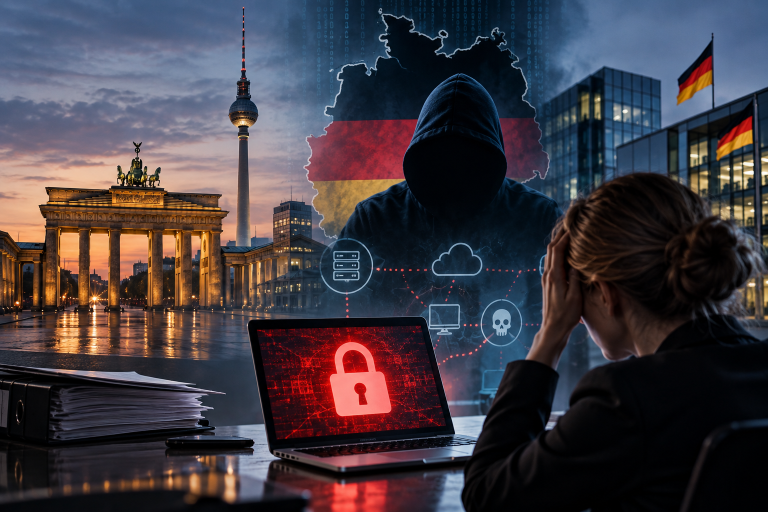

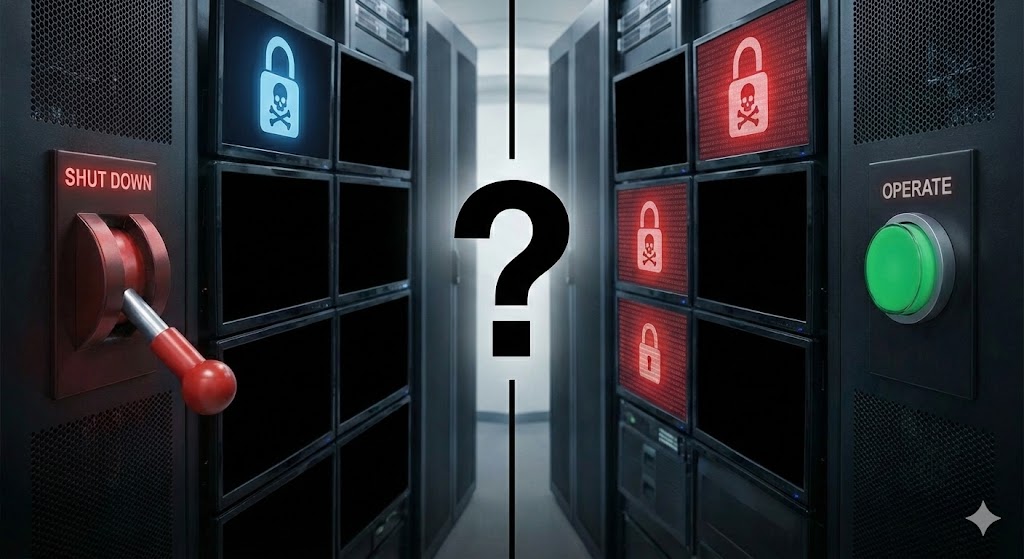
Why shutting down systems during ransomware is dangerous, find it out in this articel. When a cyber incident is discovered, the instinctive reaction is almost always the same: shut everything down immediately. From a human perspective, this response is completely understandable. Fear and uncertainty escalate within seconds, and the need to regain control feels urgent. Managers worry about data loss, employees panic, and IT teams feel intense pressure to act fast.
What feels like decisive action, however, is often the beginning of a much larger problem. In cybersecurity, speed without structure is rarely an advantage. Abruptly powering down systems may stop visible activity, but it also destroys critical evidence, eliminates recovery options, and removes visibility at the exact moment clarity is needed most. Instead of containing the incident, an immediate shutdown can turn a manageable ransomware event into a prolonged operational, legal, and financial crisis.
The Emotional Reflex vs. the Technical Reality
A cyberattack feels like an emergency — because it is one. The moment an incident is detected, adrenaline takes over. Decision-makers feel an immediate need to “do something” to regain control. Shutting down systems appears to be a logical, decisive response: if everything is turned off, the threat must be stopped. This reaction is human, understandable, and emotionally driven — but it rarely aligns with how modern cyberattacks actually work.
From a technical perspective, abrupt shutdowns introduce new risks instead of reducing existing ones. Modern attacks unfold in stages, often over days or even weeks. Much of the attacker’s activity exists only while systems are running. When a compromised system is powered off without preparation, active memory is wiped instantly. Malware processes running in RAM disappear, command-and-control connections are lost, and volatile forensic data vanishes without a trace. At the same time, attack timelines become fragmented. Investigators lose the ability to reconstruct what happened, when it happened, and how far the compromise actually spread.
What makes this especially dangerous is the illusion of safety. A powered-down system feels “clean” and under control, but in reality, visibility is gone. Recovery options shrink dramatically because decisions must now be made without reliable evidence. Teams are forced to guess instead of analyze, rebuild instead of verify, and assume instead of know. What initially feels like stopping the attack often means blinding yourself in the middle of an investigation — exactly when clarity matters most.
What Happens Inside a Compromised System
Modern cyberattacks are rarely loud or obvious. There are no flashing warnings, no dramatic system failures, and often no immediate signs that anything is wrong. Instead, today’s attacks are quiet, persistent, and carefully orchestrated. Their primary goal is not destruction, but control — and control requires staying unnoticed for as long as possible.
Once attackers gain initial access, they rarely stop at a single system. They move laterally through the network, exploring connected devices, shared credentials, and trusted relationships between systems. This movement often happens slowly and deliberately, designed to blend in with normal business activity. At the same time, attackers establish multiple access points. Even if one entry path is discovered and closed, others remain active in the background, ensuring continued control.
A critical aspect of modern attacks is that many malicious processes run directly in memory. These memory-resident techniques leave little to no trace on disk, making them extremely difficult to detect with traditional security tools. As long as the system is running, these processes are active, communicating, executing commands, and adapting to their environment. The moment the system is abruptly shut down, this entire layer of activity disappears — not because the threat is gone, but because visibility is lost.
To remain invisible, attackers frequently rely on legitimate administrative tools already present in the environment. PowerShell, remote management utilities, scheduled tasks, and system services are abused to carry out malicious actions under the appearance of normal IT operations. From the outside, everything looks routine. Internally, however, the attacker is mapping systems, escalating privileges, and preparing the next stage of the attack.
All of this activity exists within a living, running system. Pulling the power too early does not stop the strategy behind the attack — it only removes the evidence needed to understand it. Without insight into these internal processes, organizations lose the ability to determine how deeply systems were compromised, which assets were affected, and whether the attacker still has hidden access waiting to be reactivated.
The Evidence You Lose Forever
Some data can never be recovered once a system is powered off. This is one of the most misunderstood aspects of incident response. While files on disk may still exist, a significant portion of the most valuable forensic evidence only lives in a running system. The moment power is cut, this information disappears permanently — without backups, without logs, and without second chances.
Among the first things lost are the contents of RAM. Active memory may contain running malware, injected code, decrypted payloads, or in-memory tools used by the attacker. These elements often leave no trace on disk and are specifically designed to vanish once the system is shut down. Along with memory, active network sessions are terminated. Ongoing connections to command-and-control servers disappear, cutting off visibility into how attackers communicated, what commands were issued, and whether data was actively being transferred out of the environment.
In ransomware incidents, this loss can be particularly severe. Encryption keys are sometimes generated or stored temporarily in memory. Powering down a system can destroy these keys before they are captured, eliminating potential recovery paths. Temporary files used during data exfiltration — staging areas, compressed archives, or transient transfer files — may also be erased automatically on shutdown, removing crucial indicators of what information was targeted or stolen.
Equally damaging is the loss of real-time attacker activity. Commands executed through remote shells, privilege escalation attempts, or live configuration changes are no longer observable once the system goes dark. Without this evidence, investigators are left with fragments instead of facts.
The result is uncertainty. Without volatile forensic data, organizations may never fully understand how the attacker gained access, which vulnerabilities were exploited, or whether stolen credentials were involved. It becomes difficult — and sometimes impossible — to determine what data was accessed or exfiltrated, whether persistence mechanisms remain hidden in the environment, or how long the attacker had been inside before detection.
This uncertainty is not just a technical problem. It creates serious legal, financial, and operational risks. Regulatory reporting becomes more complex, breach notifications may need to be broader than necessary, cyber insurance claims can be challenged, and business leaders are forced to make high-impact decisions based on incomplete information. In many cases, the lack of evidence causes more long-term damage than the initial attack itself.
Ransomware: Why Shutdowns Can Backfire
In ransomware incidents, shutting down systems too early can be especially dangerous. While the intention is to stop the encryption process and limit damage, the opposite can happen. Modern ransomware operates in phases, and abrupt shutdowns can interrupt these phases in ways that permanently damage systems and data rather than protect them.
One of the most critical risks is the loss of decryption material. Some ransomware strains generate or temporarily store encryption keys in memory during the encryption process. Powering off a system destroys this volatile information instantly. Once lost, these keys cannot be recreated, leaving encrypted files permanently inaccessible — even if the ransomware variant is later identified or a decryptor becomes available.
Another common issue is partial encryption. If a system is shut down while encryption is still in progress, files may be left in an inconsistent or corrupted state. Databases, virtual machines, and large data sets are especially vulnerable. In these cases, neither the original files nor the encrypted versions are usable, complicating recovery efforts and significantly increasing downtime.
Backups are not immune to this effect. When shutdowns occur during active ransomware execution, backup processes may be interrupted, snapshot chains may break, or backup data may already be contaminated. Organizations often discover too late that their backups are incomplete, outdated, or silently encrypted as well. What was assumed to be a safety net turns into another point of failure.
In contrast, keeping a compromised system running under controlled isolation can preserve critical options. By disconnecting affected systems from the network while maintaining power, incident response specialists may be able to capture encryption keys from memory, identify the exact ransomware variant, and observe its behavior. This visibility allows responders to assess whether encryption is ongoing, prevent further spread to other systems, and determine the most effective recovery strategy.
Immediate shutdown removes all of these possibilities. It replaces informed decision-making with irreversible loss of data and evidence. In ransomware cases, patience combined with containment often provides better outcomes than speed driven by panic.
Business Impact: Downtime Gets Longer, Not Shorter
Ironically, panic-driven shutdowns often increase downtime instead of reducing it. While the intention is to bring systems back online as quickly as possible, the lack of evidence caused by an abrupt shutdown slows every subsequent step of the response. Without reliable forensic data, investigations take significantly longer. Teams are forced to work with assumptions rather than facts, reconstructing events from incomplete logs and fragmented system states.
As a result, systems often have to be rebuilt blindly. Instead of restoring only affected components, entire environments may need to be wiped and rebuilt from scratch because there is no clear understanding of what was compromised and what remained untouched. This approach is time-consuming, expensive, and disruptive — especially for organizations that rely on complex infrastructures, integrated applications, or legacy systems.
Trust in backups is also reduced. When the scope of an incident is unclear, backups can no longer be considered safe by default. Organizations must verify whether backups were taken before the compromise, whether ransomware or malware reached backup systems, and whether restored data would reintroduce the same threat. This verification process alone can add days or weeks to recovery timelines.
Compliance and reporting obligations further extend downtime. Regulatory requirements often demand clear timelines, impact assessments, and evidence-based conclusions. When critical forensic data is missing, reporting becomes more complex and conservative. Notifications may need to be broader than necessary, legal reviews take longer, and external audits become more demanding.
Cyber insurance claims are another area where evidence matters. Insurers increasingly require proof of incident scope, timelines, and response actions. A shutdown that eliminated key evidence can lead to delays, disputes, or reduced coverage, adding financial pressure at the worst possible moment.
What could have been a controlled, phased response turns into a prolonged business interruption. Instead of isolating and recovering affected systems step by step, organizations face extended downtime, rising costs, and ongoing uncertainty. In many cases, the damage caused by panic-driven decisions exceeds the impact of the initial attack itself.
The Right First Steps Instead
This does not mean “do nothing.” On the contrary, effective incident response requires decisive action — but action guided by structure, not panic. The difference lies in doing the right things in the right order. A measured first response preserves options instead of destroying them and creates the foundation for faster, safer recovery.
A safer approach begins with isolating affected systems from the network rather than powering them off. Disconnecting network access limits further spread while keeping the system state intact for analysis. This allows responders to observe what is happening inside the environment, understand attacker behavior, and make informed decisions based on evidence instead of assumptions.
Preserving the system state is equally critical. Keeping systems running under controlled conditions ensures that volatile forensic data remains available. Memory contents, active processes, and live connections provide essential insight into the scope of the incident. Without this information, organizations lose visibility at the exact moment it is needed most.
Clear documentation is another foundational step. Recording when suspicious activity was first noticed, what systems were affected, and which actions were taken creates a reliable timeline. These observations support technical investigations, legal assessments, compliance reporting, and communication with external partners. Even small details can later become crucial in understanding how the incident unfolded.
Early involvement of incident response specialists significantly improves outcomes. Experienced responders know when to contain, when to observe, and when to shut systems down deliberately. Bringing them in early prevents irreversible mistakes and helps organizations prioritize actions based on risk, not fear.
Finally, internal communication must be calm, clear, and controlled. Panic spreads faster than malware. When teams understand what is happening, what is being done, and what is expected of them, unnecessary actions are avoided and trust is maintained. Clear communication supports coordinated response instead of chaotic reactions.
The goal of these first steps is simple but critical: containment without destruction. By preserving evidence, maintaining visibility, and acting with intent rather than impulse, organizations retain control — even in the middle of a cyber incident.
When Shutdown Is the Right Call
There are situations where shutting down systems is not only justified, but necessary. The critical distinction is that these decisions are made deliberately, based on assessment and intent — not as an emotional reflex in the first moments of panic. Knowing when to shut systems down is as important as knowing when not to.
One clear case is physical safety. If a cyber incident creates a risk to human safety — for example through compromised industrial systems, medical devices, or building controls — immediate shutdown may be required to prevent harm. In these scenarios, protecting people always takes precedence over preserving digital evidence.
Hardware-related risks are another valid reason. When systems show signs of physical damage, overheating, electrical instability, or imminent failure, continuing operation may cause permanent destruction. Shutting down in these cases is a protective measure, not a response to the cyber threat itself.
Shutdowns may also be necessary when encryption is spreading in an uncontrolled manner and containment through network isolation is no longer effective. If ransomware is actively propagating across systems and cannot be reliably isolated, powering down selected systems may be the only way to prevent widespread destruction. Even in these situations, shutdowns should be targeted, documented, and coordinated — not indiscriminate.
Legal and regulatory directives can also mandate shutdowns. Instructions from regulators, law enforcement, or legal counsel may require systems to be taken offline to preserve compliance, protect evidence under specific legal frameworks, or prevent further liability. In such cases, the decision is guided by external obligations rather than internal urgency.
The defining factor in all these scenarios is informed action. A shutdown executed with understanding, documentation, and clear objectives is fundamentally different from a panic-driven response. Emotional reactions remove options; informed decisions preserve control. In effective incident response, restraint and clarity are often the strongest tools an organization has.
A Calm Response Is a Strategic Advantage
Cyber incidents are not won in the first five minutes. They are won through clarity, evidence, and disciplined response over the hours and days that follow. While urgency is unavoidable, haste is not a strategy. Organizations that manage to slow down just enough to think clearly gain a decisive advantage at the moment it matters most.
Calm organizations recover faster because their actions are intentional. Instead of reacting blindly, they preserve evidence, maintain visibility, and prioritize containment over destruction. This allows response teams to focus on what actually matters: understanding the scope of the incident, limiting further damage, and restoring systems safely rather than repeatedly fixing the same problems.
They also lose less data. By maintaining controlled access to compromised systems and avoiding unnecessary shutdowns, valuable forensic information remains available. This visibility helps determine which data was truly affected and prevents overly aggressive recovery measures that can cause additional loss.
Legal exposure is reduced as well. Clear documentation, preserved evidence, and structured decision-making support accurate incident reporting and regulatory communication. When organizations can explain not only what happened, but why specific actions were taken, they position themselves more defensibly — both legally and reputationally.
Perhaps most importantly, calm responses lead to better long-term security decisions. Instead of rebuilding environments based on assumptions, organizations can address root causes, close actual attack paths, and strengthen defenses where they matter most. Lessons learned are based on facts, not fear.
In cybersecurity, slowing down slightly often means regaining control faster. Calm is not inaction. It is focus. And in the middle of a cyber incident, focus is one of the most powerful security controls an organization can have.
Conclusion: Why Shutting Down Systems During Ransomware Is Dangerous
Why shutting down systems during ransomware is dangerous becomes clear once the technical and business consequences are fully understood. Abrupt shutdowns rarely stop the attack itself, but they frequently eliminate critical evidence, destroy recovery options, and increase long-term damage. In modern ransomware incidents, where encryption processes, attacker activity, and decryption material often exist only in memory, powering systems off too early can turn a difficult situation into an irreversible one.
A controlled response focused on containment rather than destruction offers far better outcomes. Isolating systems from the network, preserving system state, and involving incident response specialists early allows organizations to make decisions based on evidence instead of fear. This approach shortens recovery time, reduces data loss, and supports legal, regulatory, and insurance requirements.
There are situations where shutting down systems is the right call — particularly when safety, hardware integrity, or legal obligations are at risk. The difference lies in intent. A deliberate, informed shutdown is a strategic decision. A panic-driven shutdown is a gamble with limited upside and significant risk.
In ransomware incidents, calm is a competitive advantage. companies that resist impulsive actions maintain control, recover faster, and emerge with stronger security foundations. Understanding why shutting down systems during ransomware is dangerous is not about delaying action — it is about choosing the right action at the right time.
I also recommend you read the following articles
Cybersecurity 2026: The Biggest Risks for Businesses – and How to Protect Your Company
How to Secure Your Business After a Virus Infection on the Network
Inside Germany’s Ransomware Struggle: Lessons from Real Incidents
The 7 Best Backup Tools for Your Company in 2026
The Hidden Cost of a Ransomware Attack — And Why It Can Break Your Business
Connect with me on LinkedIn
This is what collaboration looks like
Take a look at my cybersecurity email coaching
And for even more valuable tips, sign up for my newsletter