
When business owners and IT managers think about cybersecurity, antivirus software is often the first — and sometimes the only — tool that comes to mind. This is understandable. Antivirus has been marketed as the standard security solution for decades. It is easy to install, familiar to most users, and its presence on a device creates a visible feeling of protection. For many organisations, once antivirus is installed, it feels as if the job is done.
However, this sense of security can be misleading. Relying only on antivirus is a bit like locking the front door while leaving the windows open. Attackers today have many different ways to enter systems, and not all of them involve traditional malware. Modern cyberattacks often start with phishing emails, stolen login credentials, outdated software, or simple human mistakes. In these situations, antivirus software may not detect the threat at all.
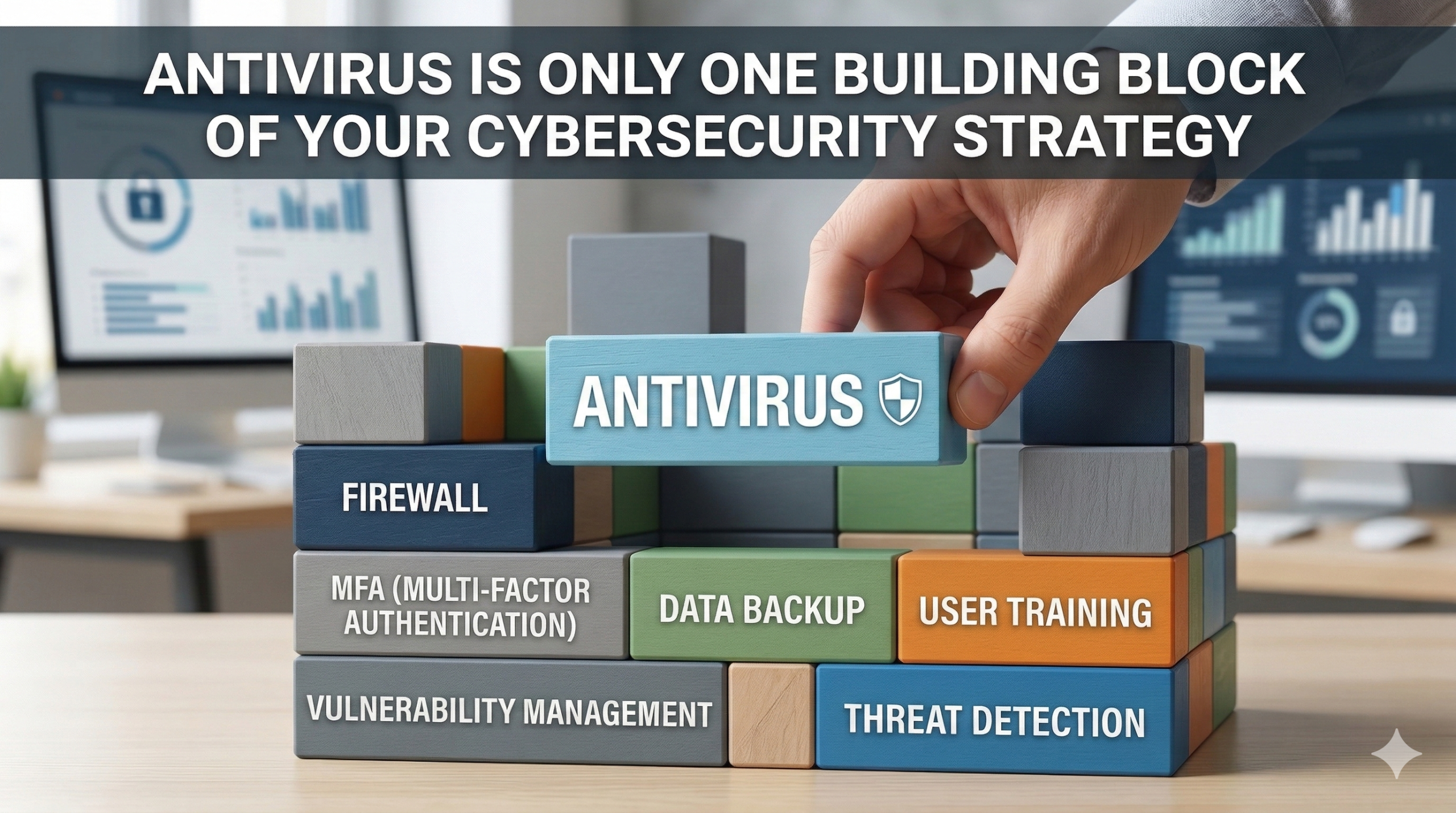
For this reason, businesses need to understand an important principle: antivirus is only one building block of a complete cybersecurity strategy. Real protection comes from combining multiple security measures that work together to reduce risk and protect systems, data, and business operations.
What Antivirus Actually Does
Antivirus software is designed to detect and block malicious software that can harm a computer or steal data. It continuously scans files, programs, downloads, and system activity to identify potential threats before they can cause damage.
Most antivirus tools work by comparing files with a large database of known malware. If the software finds a match, it blocks the file or removes it from the system. Many solutions also scan email attachments, websites, and downloaded files to prevent users from opening infected content.
Typical threats detected by antivirus software include:
-
traditional computer viruses
-
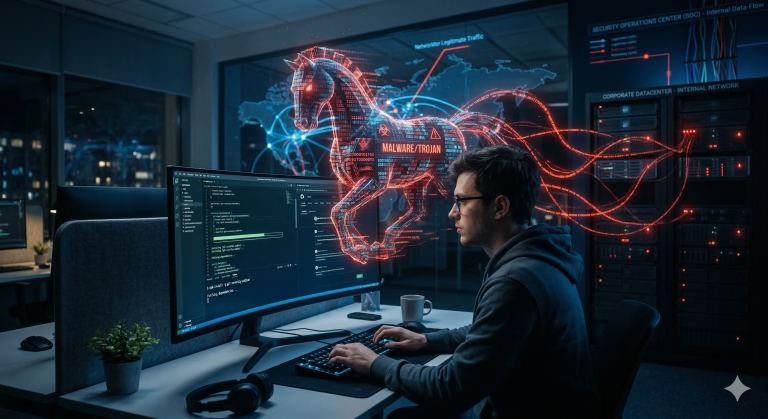
trojans that hide inside normal-looking programs
-
malicious downloads from unsafe websites
-
infected email attachments
Modern antivirus solutions are more advanced than older versions. Many products now include behavior-based detection. This means they monitor how programs behave on a system. If a program suddenly starts acting suspiciously — for example by trying to encrypt many files or change important system settings — the antivirus software may block the activity. Because of this, antivirus software provides an important first layer of protection for many systems. It helps stop common malware infections and reduces the risk of accidental downloads of malicious software.
However, antivirus software mainly focuses on detecting malware. It is designed to identify harmful programs, not to protect against every possible cyber risk. For example, antivirus software cannot prevent an employee from entering their password on a phishing website. It cannot stop attackers from using stolen login credentials, and it cannot fix security vulnerabilities in outdated software. This is why antivirus should always be seen as one component of a broader cybersecurity strategy, rather than the only line of defense.
For a deeper explanation of this topic, you can also read our article “Why Virus Protection Alone Is Rarely Enough – and Why Knowledge Is the Key”, which explores why cybersecurity awareness and understanding play such an important role in protecting modern businesses.
Cybersecurity Is a Combination of Multiple Layers
Effective cybersecurity works like a layered protection system. Instead of relying on a single tool, companies combine several security measures that protect different parts of the IT environment. If one layer fails, another layer can still stop or limit the attack.This concept is often called defense in depth. The idea is simple: the more protective layers a system has, the harder it becomes for attackers to reach sensitive data or critical systems. Some of the most important building blocks of a layered cybersecurity strategy include the following.
System updates and patch management
Many cyberattacks target known vulnerabilities in outdated software. Operating systems, browsers, plugins, and business applications regularly receive security updates that fix these weaknesses. If companies delay these updates, attackers can exploit the vulnerabilities to gain access to systems. Regular patch management helps close these security gaps and significantly reduces the risk of exploitation.
Strong access control
Weak passwords remain one of the most common security problems in many organizations. Attackers often use automated tools to guess simple passwords or reuse credentials that were leaked in previous data breaches. Companies can reduce this risk by using strong password policies and encouraging employees to use unique passwords for every account. Password managers also help users store and manage secure credentials without needing to remember them all.
Multi-factor authentication
Multi-factor authentication (MFA) adds an additional verification step when users log into a system. Besides entering a password, the user must confirm their identity using another factor, such as a mobile app code or a hardware token. This extra layer of security is extremely effective. Even if an attacker steals a password through phishing or a data breach, they usually cannot access the account without the second authentication factor.
Backup strategies
Reliable backups are essential for protecting business data and ensuring business continuity. If systems fail or ransomware encrypts company files, backups allow the organization to restore its data and continue operations.
Backups should be created regularly and stored securely, ideally in a separate location or cloud environment. It is also important to test backup systems regularly to ensure that data can actually be restored when needed.
Employee awareness
Cybersecurity is not only a technical challenge — it is also a human one. Many cyber incidents begin with phishing emails, fraudulent messages, or social engineering attempts. Employees who understand these risks are far less likely to click suspicious links or download unsafe attachments. Regular security awareness training helps staff recognize common attack methods and report potential threats early.
Monitoring and detection
Even with strong security controls, organizations should assume that some threats may still reach their network. For this reason, monitoring systems and network activity is an important part of cybersecurity. Security monitoring tools can detect unusual behavior, such as unexpected login attempts, suspicious network traffic, or unauthorized changes to systems. Early detection allows companies to respond quickly and limit the damage of a potential attack.
Why Businesses Should Think Beyond Antivirus
Relying only on antivirus protection creates a dangerous gap in a company’s security strategy. It is similar to locking the front door while leaving all other doors and windows open. The system may appear protected, but attackers can still find many other ways to enter. This situation is common in many small and medium-sized businesses. Antivirus software is often installed on computers, and this creates the impression that the company has already addressed cybersecurity. In reality, however, many other risks may still exist within the organization.
Cybersecurity should always be seen as a risk management process, not just a single tool. Businesses must identify where their weaknesses are and reduce those risks through different security measures.
When companies focus only on antivirus protection, they often overlook other critical areas of security. For example, access to company systems may not be properly controlled. Employees might use weak or reused passwords, and sensitive accounts may not have multi-factor authentication enabled. If attackers obtain login credentials, they can access systems directly without triggering antivirus alerts.
Another common weakness is backup management. Without reliable backups, companies may lose important data during a ransomware attack or a system failure. In these situations, the business may face serious operational and financial consequences. Employee awareness is another important factor that is often underestimated. Many attacks begin with phishing emails or social engineering. If employees are not trained to recognize these threats, attackers can gain access to company systems simply by tricking someone into clicking a link or sharing login credentials.
These examples show that cybersecurity involves many different areas working together. Antivirus software protects against certain types of malware, but it cannot solve every security problem. A stronger cybersecurity strategy focuses on building multiple layers of protection. When companies combine antivirus with secure access controls, regular updates, reliable backups, employee awareness, and monitoring systems, they significantly reduce their overall risk. Thinking beyond antivirus helps businesses move from basic protection to a more structured and resilient cybersecurity approach that better protects their systems, data, and daily operations.
This is why relying only on antivirus protection can be dangerous. Businesses that want to better understand this risk should also read our article “Is Antivirus Software Sufficient Protection Against Ransomware? The Shocking Truth for SMEs”, where I explain why ransomware attacks often bypass traditional security tools.
A Layered Security Strategy: The Defence-in-Depth Approach
The concept of defence in depth comes from military strategy: if one line of defence fails, others remain in place. In cybersecurity, this means building multiple overlapping controls so that no single point of failure can bring down your entire security posture.
Here are the core layers every organisation should have in place — with antivirus as just one component among many.
1 Endpoint Protection (incl. Antivirus)
Your devices are the front line. Antivirus, EDR (Endpoint Detection and Response), and device management tools protect individual machines from known malware and suspicious behaviour. Keep all agents updated and ensure full coverage across every device — including mobile and remote endpoints.
2 Identity & Access Management (IAM)
Controlling who has access to what is one of the most effective security controls available. Enforce multi-factor authentication (MFA), apply the principle of least privilege, and regularly review user permissions. Compromised credentials are involved in the majority of breaches — strong IAM dramatically reduces the impact.
3 Network Security
Firewalls, intrusion detection systems (IDS), and network segmentation control what traffic is allowed in and out of your environment. Segmenting your network means that even if an attacker gains a foothold, they cannot move freely across your systems. Zero-trust network architecture takes this further by verifying every connection, regardless of origin.
4 Email & Web Security
Given that phishing is the leading cause of breaches, dedicated email security solutions — spam filtering, link analysis, attachment sandboxing — are essential. DNS filtering and secure web gateways add a further layer by blocking access to known malicious domains before any connection is made.
5 Patch Management
Unpatched vulnerabilities remain one of the most exploited attack vectors. Establishing a structured, timely patch management process — covering operating systems, applications, and firmware — closes doors that attackers actively search for. Automated patch tools can significantly reduce the operational burden.
6 Security Awareness Training
Your people are both your greatest vulnerability and your greatest asset. Regular, realistic training — including simulated phishing exercises — builds a security-conscious culture. Employees who know how to recognise social engineering attempts are a far more effective defence than any software tool.
7 Monitoring, Detection & Response
You cannot defend what you cannot see. Security Information and Event Management (SIEM) systems aggregate and analyse logs from across your environment, enabling faster detection of anomalies. Combine this with a clearly defined Incident Response Plan so that when something does happen, your team knows exactly what to do.
8 Backup & Recovery
Assume that at some point, something will go wrong. Robust, regularly tested backups — stored securely and separately from your primary systems — are your ultimate safety net. They are particularly critical in ransomware scenarios, where a clean backup can mean the difference between recovery and catastrophic loss.
Where to Start: A Practical Approach
For many organisations, especially small and medium-sized businesses, the idea of implementing all of these layers simultaneously can feel overwhelming. The key is to start with a risk-based approach: identify your most critical assets, understand the most likely threats to your specific business context, and prioritise controls accordingly.
A basic security assessment will typically reveal the most significant gaps quickly. In many cases, simple improvements — enabling MFA, reviewing access rights, and providing basic phishing training — can dramatically reduce risk even before more complex technical controls are in place. There is no universal right answer to how many layers you need, or which ones to prioritise first. The right cybersecurity strategy is one that is proportionate to your risk profile, tailored to your environment, and sustainable for your organisation to maintain over time. That is where a structured assessment adds the most value.
Many companies still believe that installing antivirus software automatically means their systems are secure. However, this assumption often creates a dangerous false sense of security. In reality, many businesses fall into what security experts call the “antivirus trap”, where protection appears stronger than it actually is. You can explore this problem in more detail in the article “The Antivirus Trap: Why Your Protection Is Just an Illusion.”
Conclusion – Is Antivirus Enough for Business Cybersecurity?
Antivirus software remains an important part of IT security, but it should never be seen as the complete solution for protecting a business. Modern cyber threats use many different methods, and not all of them involve traditional malware. Attackers often rely on phishing emails, stolen login credentials, outdated software, or human mistakes to gain access to company systems. In many of these situations, antivirus software cannot detect or stop the attack. For this reason, businesses should think about cybersecurity as a layered strategy, not just a single tool.
Antivirus can help detect malicious programs, but real protection comes from combining several security measures. Regular system updates, strong access controls, multi-factor authentication, reliable backups, employee awareness, and security monitoring all play an important role in reducing cyber risk. Companies that understand this approach move beyond the false sense of security created by antivirus alone. Instead, they build a more resilient cybersecurity strategy that protects their systems, data, and business operations more effectively.
Cyber threats continue to evolve, and staying informed is one of the most effective ways to protect your business. If you want more practical insights about cybersecurity risks, ransomware, and how small and medium-sized businesses can improve their security posture, feel free to follow my CyberSecureGuard Facebook page. I regularly share new articles, cybersecurity tips, and real-world security insights to help businesses better understand and reduce cyber risks.
👉 Follow CyberSecureGuard on Facebook to stay updated on the latest cybersecurity topics.