
Millions of cyber attacks happen every single day – silently, automatically, relentlessly. Most of them never make the news. Most of them are never even noticed until it’s too late. And while headlines tend to focus on spectacular breaches at major corporations or government agencies, the reality is far more widespread – and far closer to home than most people realize.
Here’s a question worth sitting with for a moment: Do you actually know whether your business, your country, or your industry is a likely target? Most people don’t. And that gap between perception and reality is exactly where cybercriminals do their best work.
Many business owners assume they’re too small to be interesting to hackers. Others believe their country simply isn’t important enough to attract serious attacks. Both assumptions are not only wrong – they’re dangerous. Because in the world of cybercrime, attackers don’t think in terms of prestige or politics. They think in terms of opportunity. And opportunity exists everywhere there’s a connected device, a weak password, or an unpatched system.
The truth is, not all countries are equally targeted – and the reasons behind that are far more instructive than most people expect. Understanding who gets attacked the most, and why, reveals a set of principles that apply directly to your own situation as a business owner. It tells you what makes a target attractive, what makes a target resilient, and what you can do right now – without a big budget or a dedicated IT team – to make yourself a much harder target.
In this article, we’ll break down the global cyber threat landscape country by country, look at what the data actually tells us, and translate those insights into practical steps for small and medium-sized businesses. Whether you’re based in the US, Germany, or anywhere in between, the patterns you’re about to read apply to you.
The Numbers Behind the Threat
Cyber attacks are not rare, headline-grabbing events. They are the constant, relentless background noise of the digital age—happening every hour, in every corner of the world. The numbers paint a stark picture of their scale and inevitability.
Globally, millions of cyber attacks occur each year, with the actual figure likely far higher due to underreporting. In the UK alone, 40% of businesses experience at least one successful attack annually, and the trend is rising. Small and mid-sized enterprises, often less equipped to defend themselves, are particularly vulnerable, with many never recovering after a breach. The situation is even more dire in conflict zones like Ukraine, which faced over 4,000 targeted attacks in 2023—ranging from data wipes and ransomware to crippling strikes on critical infrastructure. At the height of cyber warfare, the country endured 10 to 15 attacks per day on power grids, hospitals, and government networks, pushing its systems to the brink of collapse.
These figures make one thing undeniable: cyber attacks are not a question of if, but when. The threat is no longer an exception—it’s the norm. Organizations, governments, and even individuals must accept that they will be targeted. The only uncertainty is whether they will be ready. The consequences of a successful attack can be devastating—financial losses in the millions, weeks of operational downtime, or the irreversible erosion of customer trust.
Yet, as daunting as these numbers are, they also underscore a critical truth: preparation matters. Investing in security, continuously monitoring systems, and fostering a culture of vigilance can significantly reduce risk. In the end, the question isn’t whether an attack will come—it’s whether you’ll survive it.
The Biggest Misconception in Cybersecurity
One of the most persistent and dangerous myths in cybersecurity is the assumption that “fewer attacks means better security.” This belief is not only widespread but fundamentally flawed. In reality, a lower number of attacks often signals less attractiveness to hackers, not stronger defenses.
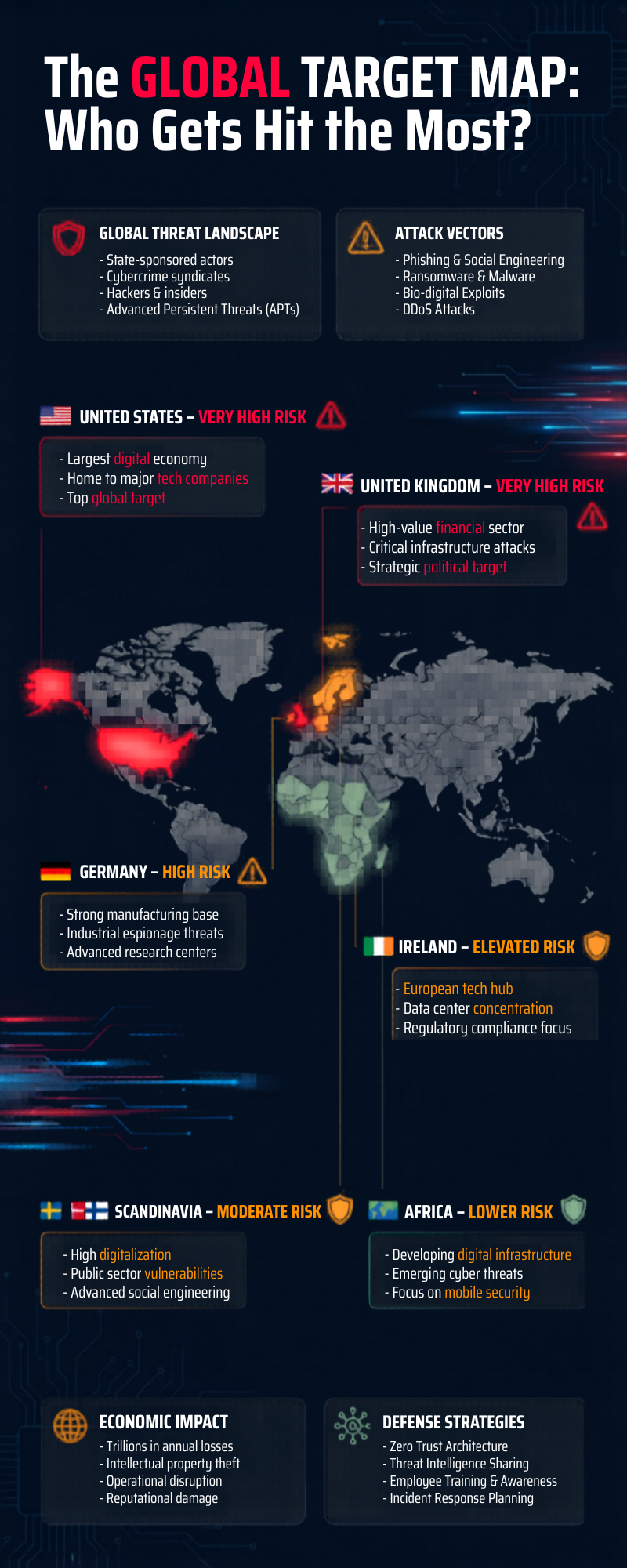
Africa serves as a stark example. The continent experiences far fewer cyber attacks than Europe or North America, but this is not due to superior security measures. Instead, it reflects the lower economic incentives for cybercriminals. As digital infrastructure expands and economies grow, however, so does the appeal for attackers. Countries like Nigeria and South Africa are already witnessing this shift firsthand, with a rising tide of cyber threats as their digital landscapes become more lucrative targets. The lesson is clear: security cannot be measured by the absence of attacks alone. True resilience lies in proactive defense, not in the illusion of safety created by temporary obscurity.
The Ukraine Lesson: Resilience Over Perfection
In most parts of the world, cyber attacks are driven by financial gain. But in Ukraine, they are a weapon of war. Here, energy grids, government systems, and communication networks face constant, deliberate assaults—not for profit, but for disruption, chaos, and strategic advantage. The goal is not to steal, but to cripple.
Yet, despite this unrelenting onslaught, Ukraine has not only endured but adapted and strengthened its defenses over time. The lesson from this experience isn’t about the scale of resources or the sophistication of technology. It’s about mindset. Cybersecurity, as Ukraine has demonstrated, isn’t about achieving the impossible—preventing every single attack. It’s about ensuring continuity even when attacks succeed. It’s about building systems that can absorb the blow, recover quickly, and keep functioning under pressure.
This principle isn’t limited to nations at war. Whether you’re a government, a corporation, or a small business, the same truth applies: resilience is the ultimate measure of security. The question isn’t whether you can stop every threat, but whether you can survive and thrive in the face of them.
What Scandinavia Gets Right
Sweden, Norway, Finland, and Denmark consistently rank among the world’s most cyber-secure nations. Their success doesn’t stem from an illusion of invulnerability, but from a pragmatic, forward-thinking approach. These countries invest early—not just in cutting-edge infrastructure, but in education and awareness, ensuring that both systems and people are prepared. They prioritize rapid response and system resilience over the futile pursuit of blocking every possible threat.
Of course, they are not immune. Their wealth, advanced digital landscapes, and geopolitical significance make them prime targets for cyber attacks. But what sets them apart is not the absence of threats—it’s how they respond when those threats materialize. For Scandinavia, the focus is clear: speed and effectiveness in damage control outweigh the impossible goal of zero risk. Their strategy proves that true cybersecurity isn’t about avoiding attacks altogether, but about minimizing impact and recovering swiftly when they inevitably occur.
The Formula Hackers Use
Cybercriminals don’t operate randomly—they follow a calculated, almost mathematical approach. Their targeting strategy is deliberate, and it applies just as much to nations as it does to businesses. The formula is simple, yet ruthlessly effective:
Value + Visibility + Weakness = Target
This equation reveals a harsh truth: you don’t need to be a global corporation to become a prime target. Small and mid-sized businesses often fit the criteria perfectly. They possess real financial value—whether through customer data, intellectual property, or direct revenue. They maintain a digital presence, making them visible to attackers. And, critically, they frequently have weaker defenses than larger enterprises, which lack the resources for robust cybersecurity measures. It’s this combination that increasingly places them directly in the crosshairs of cybercriminals. Size, it turns out, offers no protection—only preparation does.
What This Means for Small Businesses
Cyber attacks do not discriminate by company size—if anything, small businesses are often the preferred targets. Attackers assume, often correctly, that they will find easier access and weaker resistance. The vulnerabilities are usually predictable: outdated or nonexistent security software, employees with limited awareness of digital risks, weak or reused passwords across multiple accounts, no clear response plan in the event of an attack, and the common practice of using the same devices for both business and personal use.
Yet there is good news: you don’t need a dedicated IT team or an enterprise-level budget to address these gaps. The most effective improvements are often the simplest. Small, practical steps—like updating software, training staff, enforcing strong password policies, and separating business and personal devices—can dramatically reduce risk. In cybersecurity, consistency and awareness often matter more than complexity.
Practical Steps That Actually Work
When it comes to cybersecurity, small, consistent actions can make a big difference. The most effective defenses are often the most straightforward—yet they are frequently overlooked or postponed. Here’s how small businesses can significantly reduce their risk without overwhelming resources:
Updates are your first line of defense. Routers, operating systems, and software should always be kept up to date. These updates aren’t just about new features; they patch known vulnerabilities that attackers actively scan for and exploit. A single outdated system can serve as an open door for cybercriminals.
Passwords matter more than you think. Weak or reused passwords are one of the easiest ways for attackers to gain access. Using strong, unique passwords for every account is non-negotiable, and a password manager makes this effortless to maintain. It eliminates the need to remember dozens of complex passwords while ensuring each one is robust.
In this article, you’ll learn the exact factors that transform an average password into a fortress: from length and complexity to unpredictability, uniqueness, and extra shields like multi-factor authentication.
Access should be limited and intentional. Not everyone in your organization needs access to every system or file. Restrict network access to only those who require it for their roles, and review these permissions regularly. Over time, employees change roles or leave the company, and unused access points can become security liabilities.
Keep work and personal devices separate. Mixing business and personal use on the same devices increases the risk of accidental exposure or infection. If possible, dedicate devices solely to work-related tasks to minimize the chances of cross-contamination.
Backups are your safety net. Regularly backing up your data is critical, but it’s not enough on its own. Verify that your backups actually work by testing restoration processes periodically. A backup you can’t restore is no backup at all.
In this guide, you’ll discover the best backup setup for small businesses in 2026 — a practical, reliable and future-proof approach that combines cloud, local and offline protection.
Prepare for the worst with a basic incident response plan. Even the best defenses can be breached, so having a plan in place is essential. Who do you call first? Is it an IT professional, a cybersecurity expert, or law enforcement? What systems do you shut down immediately to contain the damage? How do you communicate with clients or partners if their data is compromised? Answering these questions in advance can save precious time—and reduce panic—when an attack occurs.
These steps don’t require a large budget or a team of experts. What they do require is attention, discipline, and a commitment to making security a priority. The goal isn’t perfection; it’s reducing risk to a manageable level while ensuring your business can recover quickly if something goes wrong.
The Mindset Shift That Changes Everything
When it comes to cybersecurity, most people start with the wrong question. They ask: “Will I ever be attacked?”—as if the answer might somehow be no. But this is the wrong frame of mind entirely. The reality is that every connected business, organization, or individual is a potential target. The question you should be asking instead is: “Am I prepared for when it happens?”
This subtle but profound shift in thinking—from avoidance to resilience—is what truly separates those who weather cyber threats from those who are devastated by them. Consider the examples: Even Scandinavia, with its world-class defenses, still faces attacks. Even Ukraine, under the most extreme cyber warfare conditions imaginable, manages to keep its critical systems running. The difference isn’t whether they’re targeted—it’s whether they’re ready.
Avoidance thinking lulls you into a false sense of security. It leads to complacency, delayed action, and the dangerous assumption that “it won’t happen to me.” Resilience thinking, on the other hand, accepts the inevitability of attacks and focuses on preparation, response, and recovery. It’s the difference between hoping for the best and actively planning for the worst.
This mindset doesn’t just apply to nations or large corporations. For small businesses, it’s often the single most important factor in survival. Those who assume they’re safe because they’re “too small” or “off the radar” are the most vulnerable. Those who ask, “What will I do when—not if—an attack occurs?” are the ones who minimize damage, restore operations quickly, and protect their reputation.
Preparation is the variable that matters. It’s not about eliminating risk entirely—that’s impossible—but about ensuring that when (not if) an attack comes, you have the tools, processes, and clarity to respond effectively and recover swiftly. The shift from “Will it happen?” to “Am I ready?” isn’t just a change in wording. It’s a change in survival strategy.
Conclusion: Which Countries Are Most Targeted by Cyber Attacks?
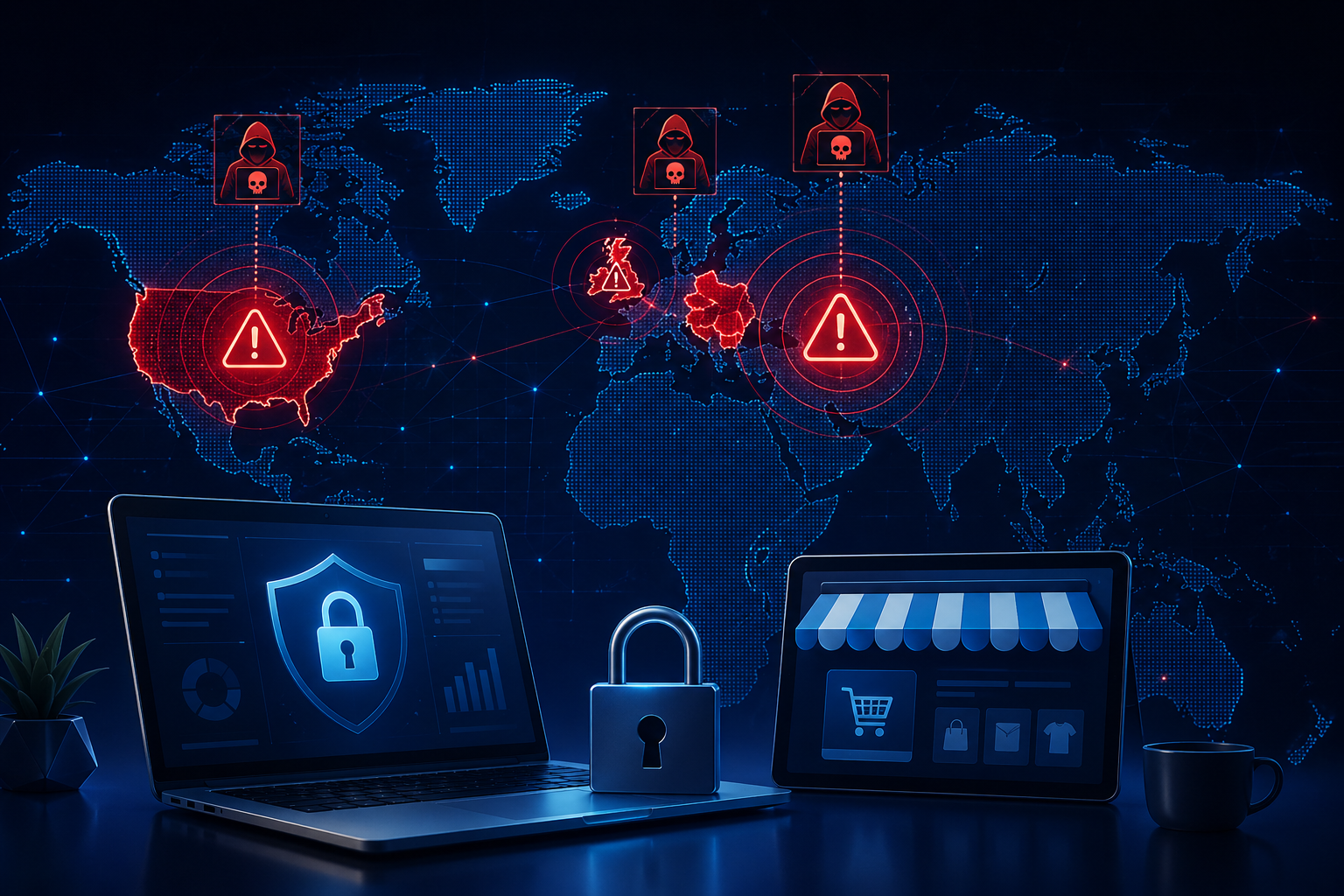
Cyber attacks are not random. Countries like the United States, Germany, and the United Kingdom are frequent targets because of their strong economies, large number of businesses, and high level of digital activity. For small businesses, this means one important thing: location does not protect you. Attackers often choose the easiest target, not the biggest one. Small businesses are especially at risk because they often lack basic security measures. This makes them an attractive entry point for cyber criminals.
The key lesson is simple. You do not need a complex security system, but you do need a solid foundation. Strong passwords, regular updates, backups, and basic staff awareness can already prevent many attacks. Cybersecurity is no longer optional. It is part of running a reliable and trustworthy business. The earlier you take it seriously, the better you can protect your data, your customers, and your reputation.
I regularly share actionable cybersecurity strategies that work. Follow me on LinkedIn to stay updated!
I also recommend you to read the following articels:
5 Red Flags That Your Business May Already Be in a Hacker’s Crosshairs
8 Real Cyberattack Stories from Germany That Almost Destroyed Businesses
Cyber attack on the Deutsche Bahn: What Businesses Must Learn From This Incident
Inside Germany’s Ransomware Struggle: Lessons from Real Incidents