
Cyberattacks are no longer a rare event but part of everyday life – for businesses and even for individual users. Phishing emails, ransomware, DDoS attacks, or zero-day exploits: attackers are becoming more sophisticated, faster, and harder to detect. Traditional firewalls and antivirus programs that rely only on static rules or known signatures are quickly reaching their limits.
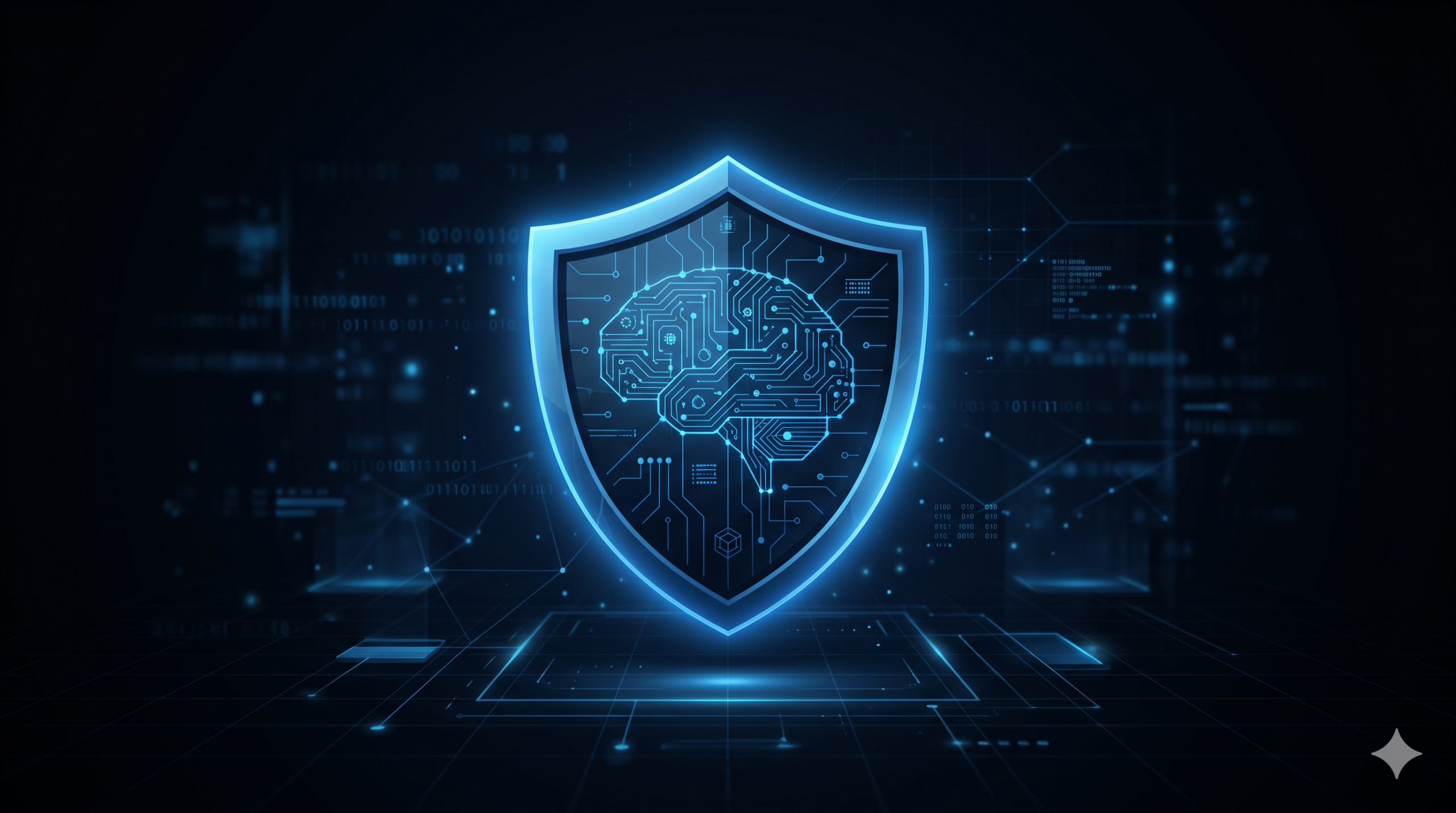
This is where the next step in cybersecurity comes into play: AI-powered firewalls. They use artificial intelligence and machine learning not only to recognize threats based on fixed patterns but also to learn dynamically from data and spot anomalies in real time. It’s like having a digital bodyguard who gets smarter with every attack and reacts instantly whenever something suspicious occurs.
But the big question remains: do we really need this? Or are AI firewalls just another hype – an expensive buzzword with little real value? In this article, we’ll take a closer look at how AI-powered firewalls work, their pros and cons, and which security programs are already adopting this technology today.
What is an AI-Powered Firewall?
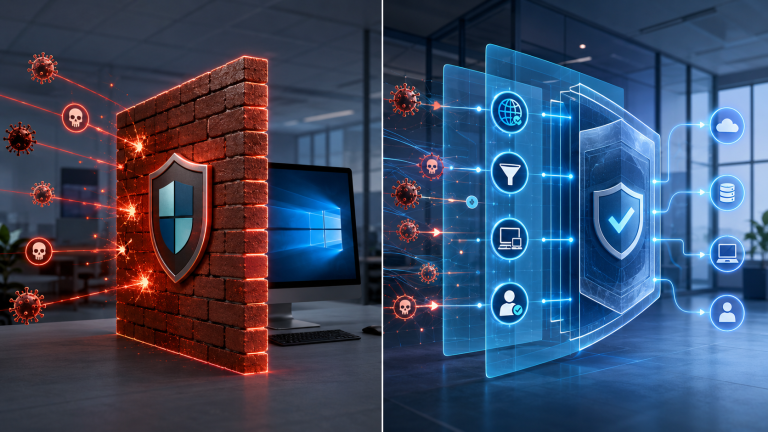
A firewall is essentially like a bouncer at the entrance to your network: it decides which data gets in and which gets out. Traditional firewalls rely on predefined rules – for example: “Allow port 443 for HTTPS connections, block everything else.” This approach works well for standard, known threats, but it’s often too rigid when attacks are new or more complex.
An AI-powered firewall goes much further. Instead of simply following a static rulebook, it actively analyzes how traffic behaves. If a pattern looks unusual, it gets flagged immediately – even if no rule explicitly covers that scenario. Through machine learning algorithms, the firewall learns from past attacks and responds faster when something similar occurs again. This is especially important for so-called zero-day attacks: unknown threats that can be identified by detecting deviations from “normal” behavior, before any signature even exists.
To illustrate the difference: a conventional firewall might block someone trying to access your system via port 22 (SSH) – but only if that rule was configured in advance. An AI-powered firewall, by contrast, would notice if a user suddenly behaves differently than usual, such as multiple login attempts from a foreign country at an unusual time. It would raise an alert or block the connection even if this exact type of attack had never been seen before. While traditional firewalls need constant manual updates and configurations, an AI firewall adapts automatically to new threats, making networks more dynamic and resilient in a world where cyberattacks no longer follow fixed templates.
Benefits of AI-Powered Firewalls
The key difference between a traditional firewall and an AI-powered one lies in the intelligence built into the protective layer. While conventional systems simply enforce predefined rules, AI-powered solutions add advanced capabilities that are critical in today’s fast-changing threat environment.
Protection against zero-day attacks is arguably the most significant advantage. Zero-day exploits are among the most dangerous types of cyberattacks because they target vulnerabilities that have not yet been discovered or patched. Traditional firewalls cannot recognize these threats, since no signature or rule exists. An AI firewall can detect abnormal patterns or behaviors immediately and stop the attack before it causes damage.
Related to this is the issue of false positives – when legitimate traffic is mistakenly flagged as malicious. This is a common problem with classic security systems that generate unnecessary alerts and waste IT teams’ valuable time. AI-powered firewalls continuously learn and improve their accuracy, allowing them to distinguish between normal activity and genuine threats more effectively. The more data they process, the sharper their judgment becomes.
Another major advantage is dynamic adaptation. Conventional firewalls rely on manual updates and constant rule adjustments. AI firewalls adapt automatically, learning from new attack methods and adjusting their defense strategies without human intervention. This ensures faster protection against emerging risks. Speed matters enormously here: while human analysts may take minutes or even hours to investigate a potential attack, an AI firewall responds within milliseconds – blocking suspicious activity instantly while simultaneously alerting administrators. That speed can make the difference between a minor incident and a major breach.
Finally, many modern AI-powered firewalls don’t just block malicious traffic – they also function as security intelligence tools, collecting data, generating reports, and providing recommendations to strengthen the overall security posture of an organization. They are active, learning systems that improve continuously and evolve alongside the threat landscape.
Risks of AI-Powered Firewalls
While AI-powered firewalls offer clear advantages, they are not a silver bullet. Like any advanced technology, they come with their own set of challenges and potential downsides that organizations should carefully consider before making the investment.
One of the most immediate concerns is cost. AI-driven security systems are generally more expensive than traditional firewalls, often requiring premium subscriptions, advanced hardware, or cloud-based services that can significantly raise the overall budget. For small businesses or individuals, this can be a real barrier.
Closely tied to cost is technical complexity. Deploying and managing an AI-powered firewall usually demands more expertise than running a conventional system. From proper configuration to ongoing monitoring, these solutions may require dedicated IT staff with specialized knowledge – something not every organization has in-house. Without the right expertise, even the most powerful firewall can be misconfigured or underutilized.
AI systems are also only as good as the data they are trained on. Poor data quality – whether biased, incomplete, or outdated – can lead to flawed decision-making, causing the firewall to miss real threats or block legitimate activity. This dependency on high-quality training data is a structural challenge that no vendor has fully solved.
Then there is the so-called black-box problem: security teams may not always understand why the firewall made a specific decision, which complicates troubleshooting and compliance audits. In industries with strict regulatory requirements, this lack of explainability can become a serious issue. It’s one of the most persistent criticisms leveled at AI systems in general, and it applies equally in the firewall context.
Lastly, AI-powered firewalls often require more computational power and memory than standard solutions. In environments where the underlying infrastructure is not strong enough, this can lead to noticeable performance degradation and slower network speeds. All of these factors together mean that AI-powered firewalls are best suited for organizations that truly need advanced, adaptive security – not a one-size-fits-all solution for everyone.
Who Is Already Using AI Firewalls?
The market for AI-powered security has grown considerably, and several vendors now offer solutions ranging from enterprise-grade platforms to more accessible tools for small businesses and everyday users.
WatchGuard IntelligentAV is a great example of how AI can be applied practically in cybersecurity. Unlike traditional antivirus solutions that primarily rely on signatures and known patterns, IntelligentAV uses machine learning algorithms to detect threats even when no official signature exists yet. What makes it particularly valuable is its ability to predict future threats before they are ever released in the wild, providing an additional layer of protection against malware variants that might only appear weeks or months later. This predictive approach is especially well suited for small to medium-sized businesses (SMBs) that lack large IT teams or enterprise-level budgets. WatchGuard IntelligentAV functions as a strategic add-on – not a full all-in-one package – for companies looking to go beyond basic protection without requiring constant input from a security specialist.
Avast, one of the most recognized names in consumer security software, has taken a different angle with its AI-powered Avast Assistant. This layer goes beyond traditional antivirus functions by detecting digital fraud attempts in real time – whether phishing emails, spoofed websites, fake online stores, or unsafe Wi-Fi connections. Machine learning is used to spot patterns that indicate scams or malicious intent. While many firewalls focus primarily on known malware, Avast’s Assistant tackles a very common gap: social engineering and deceptive tactics that are becoming increasingly professional and harder for users to spot. The result is a solution aimed at the consumer and SMB market that makes cybersecurity simple and accessible, with AI handling much of the analysis and decision-making in the background.
Quick Facts at a Glance
| Provider | AI Focus | Firewall Integrated? | Special Feature |
|---|---|---|---|
| McAfee+ | Scam detection (text, video, email) | Yes | All-in-one protection with smart scam AI |
| G Data | DeepRay (behavioral AI) | Yes | Enterprise solution with deep behavioral AI |
| Sophos | Deep learning + zero-day threat intelligence | Yes, NGFW | High-end protection combining endpoint + firewall |
| Fortinet (FortiGuard) | AI/ML + deep neural networks + inline prevention | Yes, NGFW | Enterprise-level security with inline malware blocking |
| WatchGuard (IntelligentAV) | Predictive malware detection | No (add-on module) | Proactive threat detection before public release |
| Avast | Avast Assistant for scam & Wi-Fi security alerts | No | User-friendly AI assistant for everyday protection |
Summary: AI firewall software for small businesses 2026
AI-powered firewalls are more than just a trend. They offer real advantages over traditional firewalls, especially when it comes to detecting new and unknown threats before they cause damage. At the same time, they are not a miracle cure: higher costs, technical complexity, and a dependence on data quality mean that they are not the optimal choice for every organization.
The landscape in 2026 is more diverse than ever — and that’s good news, especially for small businesses. You no longer need an enterprise budget to benefit from AI-driven protection. Solutions like WatchGuard IntelligentAV or G Data offer strong, proactive defense without overwhelming complexity, making them the smart starting point for most SMBs. Larger organizations with dedicated IT teams should look toward Sophos or Fortinet for maximum scalability and control. Everyday users and freelancers, on the other hand, will find that McAfee+ or Avast strike the right balance between simplicity and AI-driven fraud protection.
The right choice ultimately depends on your needs, your infrastructure, and your budget. But one thing is clear: AI firewall software for small businesses in 2026 is no longer a luxury — it’s a practical, accessible layer of defense that grows smarter over time. Ignoring it entirely is increasingly a risk in itself.
I also recommend reading the following articles on this topic
Is Windows Firewall Still Enough in 2026? A Business Security Reality Check
Keep Hackers Out of Your Wi-Fi: A Practical Guide for SMEs
Optimally setting up Windows Defender: Complete guide
Why Weak Firewall Configurations Still Allow Ransomware Attacks