
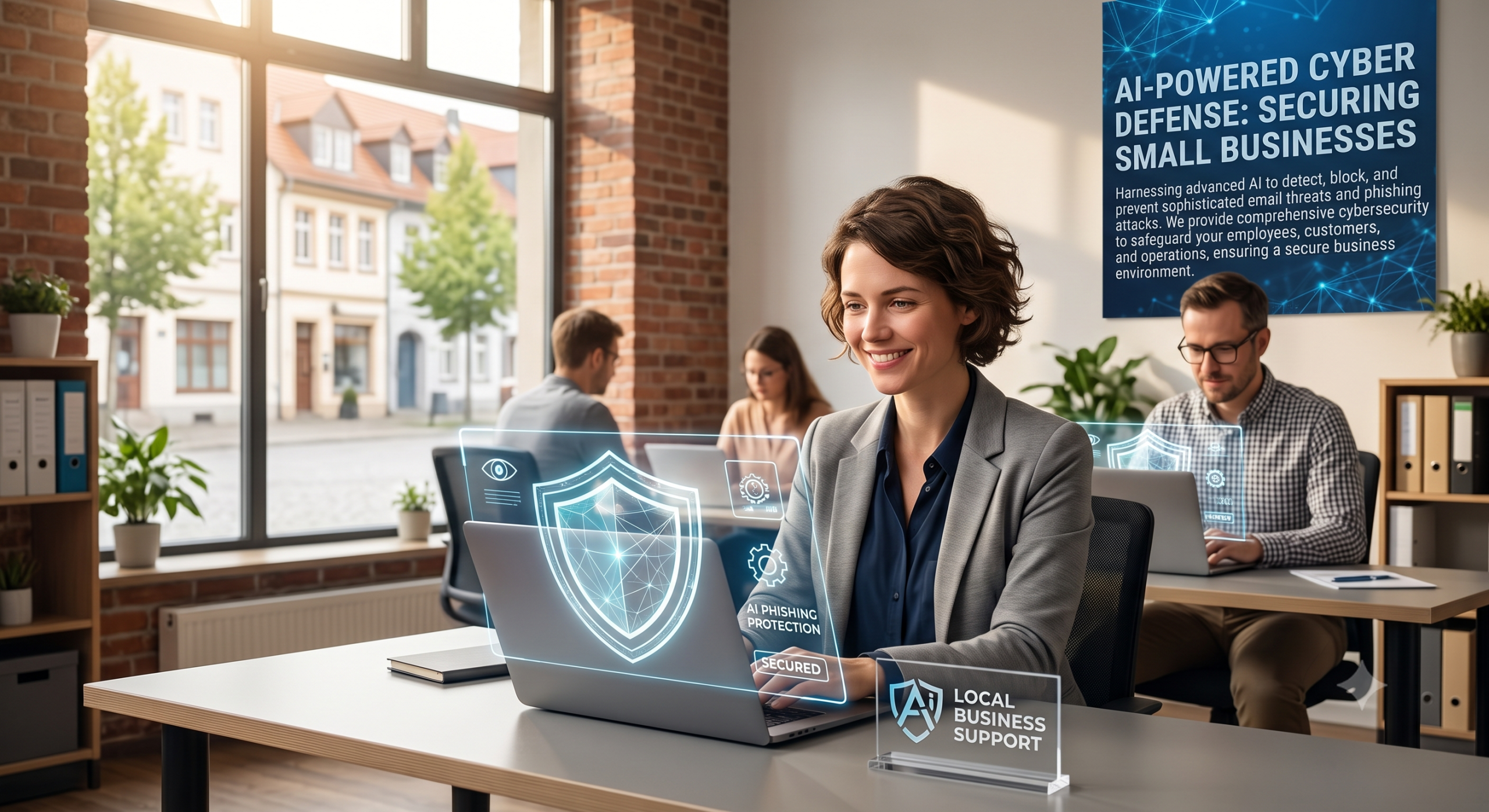
Phishing has evolved dramatically over the past few years. What was once associated with poorly written emails, suspicious links and obvious scams has become one of the most sophisticated cyber threats facing businesses today.
In 2026, attackers are using artificial intelligence, publicly available company information and professional phishing toolkits to create highly convincing attacks. Fake emails now closely resemble legitimate business communication, fake login pages are almost identical to the originals, and messages are carefully tailored to specific employees or departments.
For small and medium-sized businesses, this development is particularly concerning. Many organisations have improved their technical security, but cybercriminals have adapted just as quickly. Instead of attacking firewalls, they increasingly target people, knowing that a single successful phishing email can provide access to company accounts, sensitive data or financial systems.
Understanding how modern phishing works is the first step towards preventing it. In this article, we look at how phishing has changed in 2026, why these attacks are becoming more professional, and what practical measures businesses can take to protect themselves.
AI Makes Phishing Faster and More Convincing
Artificial intelligence has changed the way phishing attacks are created. In the past, cybercriminals often spent hours writing emails or relied on poorly translated templates that were easy to recognise. Today, AI can generate professional phishing messages within seconds, making large-scale attacks both faster and more convincing.
Modern AI tools produce emails that use natural language, correct grammar and a professional tone. They can even adapt the writing style to match a specific company, industry or individual. As a result, phishing emails no longer stand out because of obvious mistakes. Instead, they often look like legitimate business communication that employees receive every day.
AI also enables attackers to personalise their messages. Rather than sending one generic email to thousands of recipients, criminals can automatically create different versions for finance teams, human resources, sales departments or senior management. Public information from company websites, LinkedIn profiles and social media makes this even easier by providing names, job roles, suppliers and ongoing projects.
For example, a finance employee might receive a fake invoice that appears to come from a trusted supplier and references a real purchase order. An HR manager could receive what looks like a genuine job application containing a malicious attachment. An executive assistant may receive an urgent payment request that appears to come directly from the CEO or another senior executive. Because these messages match the recipient’s daily responsibilities, they are much more likely to be trusted.
Another advantage for attackers is speed. AI allows them to generate thousands of unique phishing emails in a very short time. This makes traditional spam filters less effective because every email looks slightly different. Small changes in wording, subject lines or formatting can help malicious messages bypass automated detection systems.
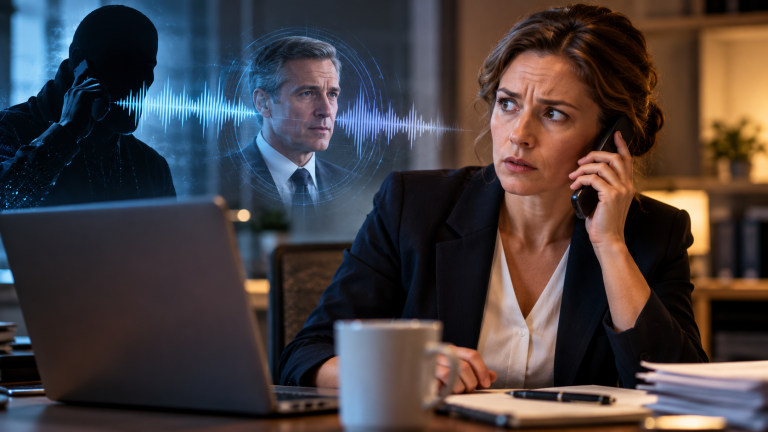
Some attackers are also experimenting with AI-generated voice messages and video content. Fake phone calls that imitate a manager’s voice or short video messages requesting urgent action are becoming more realistic. Although these attacks are still less common than email phishing, they show how quickly social engineering techniques are evolving.
The goal of modern phishing has not changed: attackers still want to steal credentials, install malware or trick employees into transferring money. What has changed is the quality of the deception. AI gives cybercriminals the ability to create highly convincing attacks with very little effort, making it increasingly difficult for employees to distinguish between genuine communication and a carefully crafted scam.
Public Information Helps Criminals
Modern phishing attacks often begin long before the first email is sent. Instead of relying on guesswork, cybercriminals spend time collecting publicly available information about a company and its employees. This process, known as open-source intelligence (OSINT), allows attackers to build a detailed picture of an organisation without ever accessing its internal systems.
Company websites, LinkedIn profiles, press releases, social media accounts and job advertisements can reveal a surprising amount of useful information. Attackers can identify key employees, management teams, suppliers, customers, business partners and even ongoing projects. Contact details, organisational charts and descriptions of business processes can provide valuable clues for planning a convincing phishing campaign.
For example, a criminal may discover on LinkedIn that an employee recently joined the finance department. A few days later, that employee receives an email that appears to come from the accounting manager, asking them to review an urgent invoice. Another attacker may notice on a company’s website that a new software platform is being introduced and send fake login instructions that closely match the real project. Because these messages are based on real events, they appear much more trustworthy.
Press releases and social media posts can also provide useful information. Announcements about new customers, upcoming events or office expansions give attackers ideas for believable stories. Even photos shared on social media may reveal employee names, office locations, computer screens or security badges that can be used to make phishing attacks more convincing.
Small and medium-sized businesses are increasingly becoming attractive targets. Many organisations assume that cybercriminals are only interested in large enterprises, but SMEs often publish just as much information online while having fewer security resources and less formal verification procedures. Attackers know that smaller businesses may have limited cybersecurity budgets and that employees often perform multiple roles, making them more likely to respond quickly to unexpected requests.
The challenge is not that companies should stop communicating online. A professional online presence is important for customers, partners and recruitment. However, businesses should carefully consider how much information they share publicly and whether sensitive details about internal processes, key personnel or business operations are really necessary.
The more information attackers can collect, the easier it becomes for them to create phishing messages that feel authentic. Limiting unnecessary public information and educating employees about targeted phishing can significantly reduce the chances of a successful attack.
Fake Login Pages Are Almost Perfect
One of the most dangerous developments in modern phishing is the quality of fake login pages. Just a few years ago, fraudulent websites often contained poor designs, broken layouts or obvious spelling mistakes that made them easier to recognise. Today, many phishing websites are almost identical to the legitimate services they imitate.
Cybercriminals use phishing kits that can accurately copy the appearance of popular platforms such as Microsoft 365, Google Workspace, Dropbox, banking portals and cloud services. Logos, colours, fonts, buttons and page layouts are reproduced so precisely that even experienced users may struggle to notice the difference at first glance.
In many cases, the phishing email itself looks completely legitimate. It may claim that your password is about to expire, that a document has been shared with you, or that unusual account activity has been detected. When the user clicks the link, they are taken to a fake login page that closely mirrors the real website. Believing the request is genuine, they enter their username and password, unknowingly sending their credentials directly to the attacker.
Modern phishing kits have also become far more advanced. Some automatically forward victims to the real website after stealing their login details, making the attack almost invisible. Others capture session cookies, allowing attackers to access accounts without immediately needing the user’s password again. More sophisticated phishing frameworks can even intercept authentication processes in real time to increase the likelihood of a successful compromise.
Another challenge is that attackers increasingly use trusted cloud services and legitimate web platforms to host phishing pages or redirect victims. This makes malicious links appear more credible and can help them bypass basic email security filters. Shortened URLs and lookalike domain names further increase the risk, especially when users are working quickly or accessing emails on mobile devices.
Fortunately, there are several warning signs that users can look for. Before entering login credentials, employees should always check the website address carefully, rather than relying on the appearance of the page. A familiar logo does not guarantee that the site is genuine. Unexpected login requests, urgent security warnings or links received through unsolicited emails should always be verified before any credentials are entered.
Technical security measures such as multi-factor authentication (MFA), password managers and modern email filtering solutions provide important protection, but they cannot stop every phishing attempt. The most effective defence is a combination of technical safeguards and user awareness. Employees who take a few extra seconds to verify a login page can often prevent a serious security incident.
As phishing websites continue to improve, the difference between a legitimate login page and a fraudulent one is becoming increasingly difficult to spot. This is why organisations must prepare their employees not only to recognise suspicious emails, but also to question every unexpected request for login credentials.
How Attackers Hide Their Tracks
Cybercriminals today are just as skilled as professional software developers. They invest time and money into making their attacks harder to detect. Here are the most concerning techniques they use:
Hiding Behind Encryption: Most of us trust the little padlock icon in our browser—it means our data is safe, right? Unfortunately, attackers use the same encryption to hide their phishing pages. A staggering 95% of blocked phishing attempts were delivered through encrypted connections. This means that without special tools to inspect encrypted traffic, organizations simply cannot see what’s coming at them.
Disguising Malicious Code: The FlowerStorm hacking group is using something called KrakVM—a virtual machine that runs inside your browser. It takes malicious code and turns it into an unreadable, encrypted format. By the time your security tools try to analyze it, it’s too late. What’s particularly worrying is that this group adopted this technique within just one month of it becoming publicly available.
Every Attack is Different: In hundreds of cases, no two phishing emails looked the same. Attackers are using generative AI to create unique, personalized messages for each victim. This “polymorphic” approach means that security systems that look for known patterns are often helpless—because there is no pattern to recognize.
Multiple Layers of Trickery: Attackers don’t rely on just one trick. According to security researchers:
-
48% of attacks hide their real URLs behind layers of obfuscation
-
48% use techniques to bypass multi-factor authentication (MFA)
-
43% use CAPTCHA challenges—the same “prove you’re human” tests that legitimate sites use—to make their fake pages look more trustworthy
These tactics show that attackers aren’t just guessing. They understand how security tools work and actively test their attacks against them.
Defending Against Professionalized Phishing
The professionalization of phishing demands nothing less than a fundamental strategic overhaul. Traditional, perimeter-based defenses are no longer sufficient when attackers operate with the sophistication of software engineering teams, leverage AI at scale, and deploy Phishing-as-a-Service kits that automate evasion. To stay ahead, organizations must adopt a layered, proactive defense architecture that anticipates compromise rather than merely reacting to it.
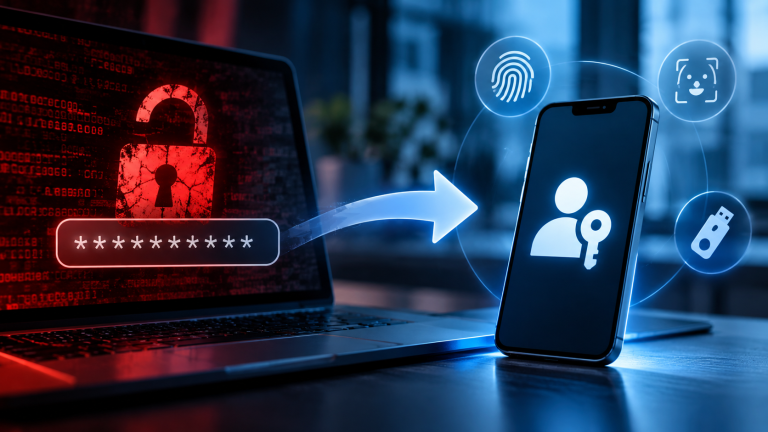
Phishing-Resistant MFA: Traditional multi-factor authentication methods—SMS one-time codes, push notifications, and even TOTP apps—are increasingly vulnerable to real-time interception through Adversary-in-the-Middle (AiTM) proxy attacks. Attackers can now capture session tokens and one-time passwords in flight, effectively neutralizing these controls. Organizations must urgently transition to FIDO2 keys or platform-based passkeys, which use cryptographic authentication bound to specific domains. These methods are inherently resistant to proxy attacks because the authentication challenge cannot be forwarded or replayed. As Microsoft and Google have both demonstrated, organizations that mandate FIDO2 can reduce account compromise rates by over 99%.
Zero Trust with Segmentation and Deception: Deepen Desai’s most critical recommendation is to adopt “zero trust segmentation with deception” to “contain the blast radius.” This philosophy starts with a simple but powerful assumption: eventually, a user—or an AI agent—will fall for a phishing attempt. The goal is not to prevent every possible breach but to ensure that a single compromised credential or session cannot escalate into a company-wide catastrophe. Micro-segmentation limits lateral movement, while deceptive decoys (honeytokens, fake credentials, or simulated file shares) can detect and expose attackers who are already inside the network. This approach transforms the inevitable breach from a disaster into a contained incident that security teams can observe, analyze, and neutralize.
TLS Inspection: The encryption that protects legitimate user privacy has become the attacker’s favorite cloak. With over 95% of phishing attempts now delivered through encrypted HTTPS traffic, organizations that do not perform inline TLS inspection are essentially flying blind. Attackers increasingly host phishing pages on legitimate, SSL-certified domains or use free cloud services with valid certificates, making their malicious sites appear indistinguishable from genuine ones. To counter this, security teams must deploy solutions that decrypt, inspect, and re-encrypt incoming traffic without compromising performance or privacy. This is no longer optional—it is a baseline requirement for any serious defense posture.
Human-AI Partnership: While AI has empowered attackers, it is also an indispensable tool for defenders—but only when combined with human judgment. The strongest resilience lies in a symbiotic partnership between automation and human intelligence. AI excels at processing massive volumes of data, identifying anomalies, and flagging suspicious patterns at machine speed. However, as Cofense experts emphasize, AI “cannot replace the accuracy and contextual understanding of human intelligence.” Subtle contextual nuances—such as unusual phrasing in an internal email from a normally brusque colleague, or a request that deviates from standard business processes—are often better caught by trained human eyes. The ideal workflow is AI-assisted triage combined with human-led investigation and decision-making.
Continuous Security Awareness Training: Traditional annual compliance training is dangerously outdated. As KnowBe4 bluntly warns: “The threat has changed. Your training hasn’t.” In 2026, training must be continuous, contextual, and adaptive. Employees need to experience realistic, AI-generated phishing simulations that replicate the latest attack techniques—including multi-channel lures (email, SMS, voice, and messaging apps), deepfake audio, and conversational AI-driven social engineering. Rather than isolated modules, effective training embeds security into the daily workflow, with real-time feedback, gamification, and bite-sized micro-learning. Crucially, it must also address the growing risk of AI agents being targeted—ensuring that even automated systems are designed with safeguards against indirect prompt injection and malicious instruction.
Incident Response and Threat Intelligence: Defending against professional phishing requires more than prevention—it demands a robust incident response plan that is regularly tested and updated. Organizations should integrate real-time threat intelligence feeds that track emerging PhaaS kits, new obfuscation techniques, and recently abused legitimate services. This intelligence enables faster detection, more accurate prioritization, and more effective remediation. Regular tabletop exercises that simulate sophisticated, AI-powered phishing campaigns help security teams practice their response and identify gaps before a real attack occurs.
In summary, the battle against professionalized phishing cannot be won with any single tool or policy. It requires a comprehensive, defense-in-depth strategy that combines cutting-edge technology, continuous human development, and an organizational culture that treats security as a shared responsibility. The attackers have professionalized—defenses must follow suit.
Beyond Email
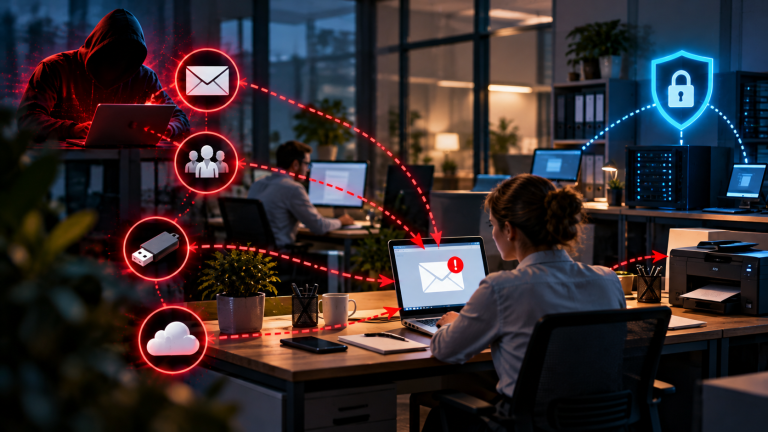
While email remains the most common delivery method for phishing attacks, cybercriminals are no longer limited to a single communication channel. As businesses increasingly rely on digital collaboration and mobile communication, attackers have expanded their tactics to reach employees wherever they work.
Today, phishing attacks can arrive through text messages (smishing), phone calls (vishing), QR codes (quishing), messaging apps, social media platforms and collaboration tools such as Microsoft Teams or Slack. The goal is always the same: to create a sense of trust or urgency that convinces the victim to reveal sensitive information, approve a payment or click a malicious link.
For example, an employee may receive a text message claiming that a package delivery has failed and asking them to confirm their details. A finance manager could receive a phone call from someone pretending to be a supplier requesting an urgent bank account change. In another case, a QR code printed on a poster, invoice or email attachment may direct users to a fake login page instead of the legitimate website.
Business collaboration platforms have also become attractive targets. Employees often trust messages received through tools like Microsoft Teams because they are used for everyday communication with colleagues and external partners. If an attacker gains access to a compromised business account, they can send convincing phishing messages from within the organisation, making the attack appear completely legitimate.
Social media platforms present another opportunity for cybercriminals. Fake recruiter messages, fraudulent business partnerships or customer support scams are increasingly common. Attackers often spend time building trust before asking the victim to open a document, download a file or visit a malicious website.
Mobile devices create additional challenges. On a smartphone, it is often more difficult to inspect a website address or identify a suspicious link. Small screens hide important details, making fake websites and shortened URLs more convincing than they would appear on a desktop computer. As more employees work remotely or travel frequently, mobile phishing attacks continue to increase.
Because phishing now reaches users through many different channels, businesses can no longer focus their security awareness programmes on email alone. Employees should learn to question unexpected requests regardless of whether they arrive by email, text message, phone call, collaboration platform or social media.
The communication channel itself is not what makes a message trustworthy. Every unexpected request involving passwords, financial transactions or sensitive information should be verified through an independent and trusted method before any action is taken.
Why Technical Protection Alone Is Not Enough
Modern cybersecurity solutions are more effective than ever. Email security gateways, spam filters, endpoint protection, antivirus software and advanced threat detection systems can automatically block millions of phishing attempts every day. These technologies are an essential part of every company’s security strategy and significantly reduce the number of malicious messages that reach employees.
However, no security solution can detect every attack. Cybercriminals continuously adapt their techniques to bypass technical controls. They change email content, use compromised business accounts, register new domains and exploit trusted cloud services to make phishing campaigns appear legitimate. Many attacks are specifically designed to avoid automated detection by looking as much like normal business communication as possible.
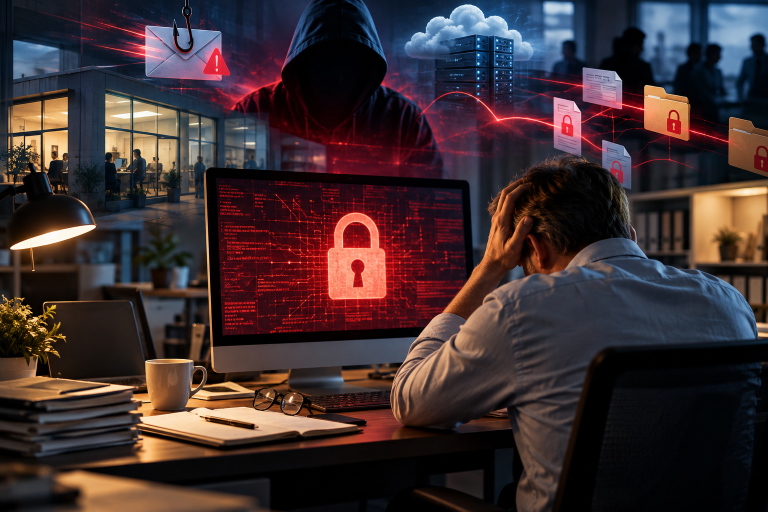
This is why phishing remains successful despite significant advances in cybersecurity technology. Attackers are no longer trying to defeat security software alone—they are targeting human decision-making. A carefully crafted email asking an employee to approve an urgent payment or verify an account may appear completely legitimate, even if it contains no malicious attachment or obvious warning signs.
Technical protection is only one layer of defence. The second layer is employee awareness. Staff who understand modern phishing techniques are far more likely to pause, question unusual requests and verify unexpected instructions before taking action. A few extra seconds of critical thinking can prevent a costly security incident.
Clear business processes also play an important role. Employees should know exactly how to verify sensitive requests, especially those involving financial transactions, password resets or changes to supplier bank details. For example, any request to transfer money or update payment information should always be confirmed through a trusted communication channel, such as a direct phone call to the known contact person.
Businesses should also implement additional security controls wherever possible. Multi-factor authentication (MFA) makes stolen passwords much less valuable to attackers. Password managers help employees create and use unique credentials for every account, reducing the impact of credential theft. Regular software updates close known security vulnerabilities that attackers may try to exploit after gaining initial access.
Perhaps most importantly, organisations should create a culture where employees feel comfortable reporting suspicious emails without fear of blame. Even experienced professionals can be targeted by sophisticated phishing attacks. Encouraging staff to report anything unusual allows security teams to respond quickly, warn other employees and minimise potential damage before an attack spreads.
Effective phishing protection is therefore not based on a single security product. It is built on multiple layers of defence that work together: reliable technical controls, well-trained employees, clear verification procedures and a security-focused company culture.
Technology can stop many attacks, but informed people remain one of the strongest defences against modern phishing.
Practical Tips for Small Businesses
Small and medium-sized businesses often believe that strong cybersecurity requires expensive enterprise solutions. In reality, many successful phishing attacks can be prevented by combining simple security measures with good everyday habits. Building a security-conscious workplace does not have to be complicated, but it does require consistency.
The first and most important rule is to slow down. Phishing attacks are designed to create urgency and encourage quick decisions. Whether the message claims that an account will be suspended, a payment is overdue or the CEO needs an immediate transfer, employees should resist the pressure to act without thinking.
Before responding to any unexpected request, ask yourself the following questions:
-
Was I expecting this message?
-
Does the request create unnecessary urgency or pressure?
-
Is the sender really who they claim to be?
-
Does the email address or website match the legitimate organisation?
-
Am I being asked to share passwords, approve a payment or open an unexpected attachment?
-
Should I verify this request through another communication channel?
These simple questions can help identify many phishing attempts before any damage occurs.
Businesses should also establish clear verification procedures for sensitive actions. For example, requests to change supplier bank details, approve large payments or reset user accounts should never be processed based on a single email alone. Instead, employees should confirm the request using a trusted phone number or another previously established communication channel.
Regular security awareness training is equally important. Employees should receive practical examples of current phishing techniques rather than only learning about traditional email scams. Short refresher sessions throughout the year are often more effective than a single annual training course because phishing tactics evolve constantly.
Multi-factor authentication (MFA) should be enabled for all important business accounts wherever possible. While MFA is not a complete solution, it provides an additional layer of protection if login credentials are stolen. Password managers can also reduce risk by creating strong, unique passwords and preventing users from entering credentials on fake websites.
Finally, businesses should encourage employees to report suspicious emails immediately. It is far better to investigate a false alarm than to ignore a genuine phishing attack. Creating an environment where employees feel comfortable asking questions and reporting concerns strengthens the organisation’s overall security posture.
Phishing attacks rely on people acting quickly without verifying what they see. A short phone call, a second opinion from a colleague or a careful check of a website address may take only a few minutes, but these simple actions can prevent financial loss, data breaches and significant disruption to the business.
Good cybersecurity is not about being suspicious of everything—it is about developing the habit of verifying unexpected requests before taking action.
Conclusion: AI phishing protection for small businesses
Phishing attacks will continue to evolve as cybercriminals use artificial intelligence, public information and increasingly sophisticated techniques to target businesses of all sizes. What once looked like an obvious scam can now closely resemble legitimate business communication, making it more difficult for employees to identify malicious messages.
For small and medium-sized businesses, effective phishing protection is no longer optional. The most successful defence combines modern security technologies with well-trained employees, clear verification procedures and a strong security culture. No single security solution can stop every attack, but multiple layers of protection can significantly reduce the risk.
Investing in phishing protection for small businesses is not just about preventing financial losses or data breaches. It is about protecting customer trust, business continuity and your company’s reputation. As phishing attacks become more professional, organisations that prepare today will be far better equipped to defend against the threats of tomorrow.
I also recommend that you read the following articles
AI-Phishing Emails: Why They’re Harder to Detect Than Ever
How to Identify Phishing Emails in 2026 – A Practical Step-by-Step Guide
How to Recognize an AI-Generated Phishing Email in Just a Few Seconds
The Components of an Attack: The 7 Phases of a Modern Phishing Attempt