

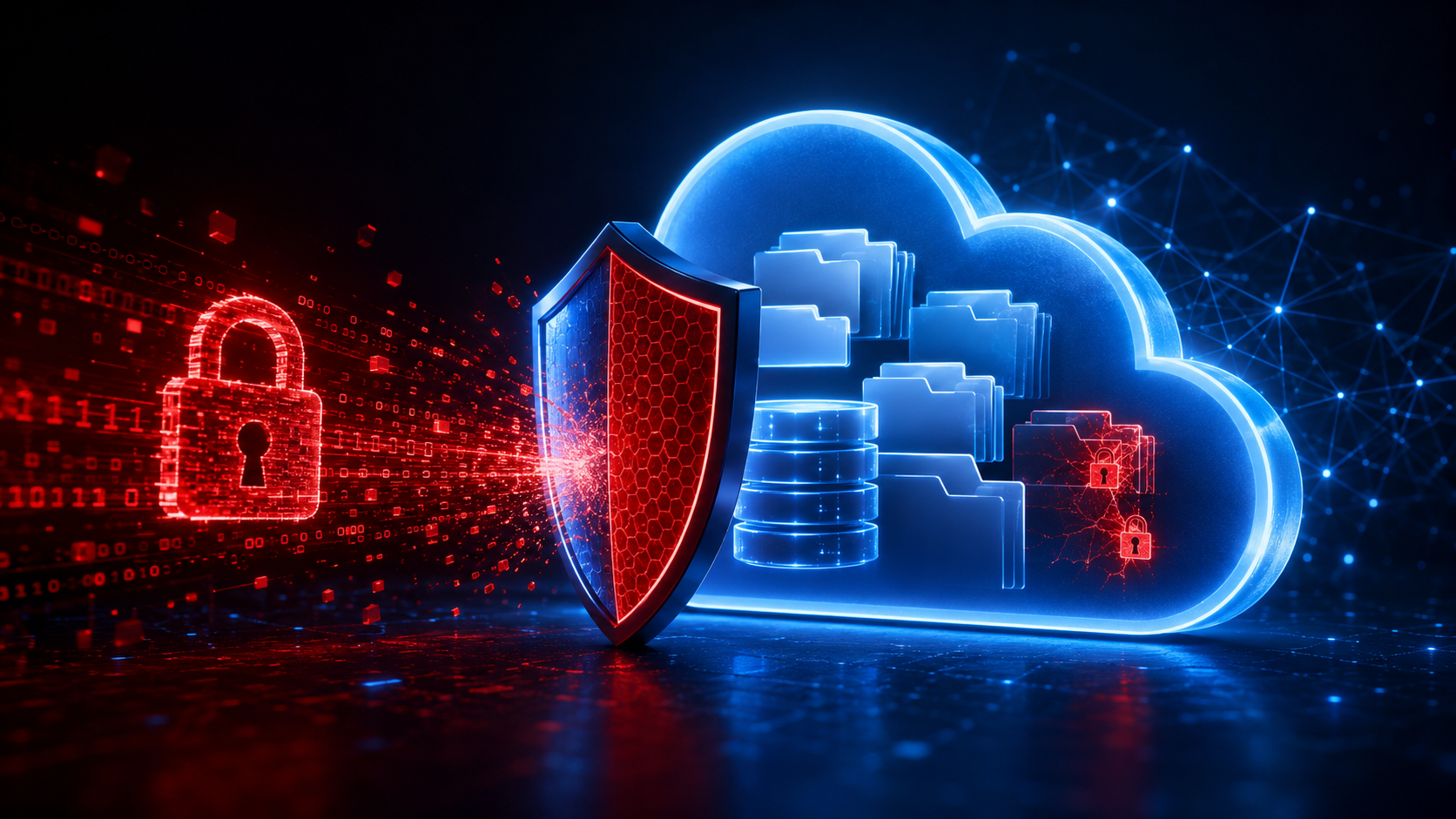
When a ransomware attack strikes, many small business owners take a deep breath and tell themselves, “At least we have our cloud backups.” It is a comforting thought, but it can be a dangerous illusion. The painful reality is that ransomware can indeed encrypt cloud backups, and it happens more often than most people realize. If your cloud storage is simply synced to your local drives, an attacker who gains access to your network can easily encrypt both your live files and the versions stored in the cloud. This single oversight has led many small businesses to lose their safety net entirely, leaving them with no choice but to pay the ransom or rebuild from scratch.
What makes this situation particularly dangerous is the false sense of security that many cloud services create. When you sign up for automatic backups, it is easy to believe you are fully protected. However, most of these services operate on a sync model, meaning they mirror whatever is on your local machine. If your machine is infected, the cloud simply mirrors the infection. Today’s ransomware is also smarter than ever. Attackers often study their targets for days, identifying which cloud services are in use and who has administrative access. When they strike, they encrypt not just your active files but also search for any connected backup repositories, ensuring you have nowhere to turn.
The good news is that you can prevent this outcome with the right strategy. By understanding how ransomware reaches the cloud and implementing a few critical safeguards, you can ensure that your backups remain your ultimate rescue plan rather than another casualty of the attack. In the following sections, we will explore the practical measures that small businesses can take to build a defense that actually works, from immutable storage to offline copies and access controls.
Understanding How Ransomware Reaches the Cloud
Many small business owners believe that cloud storage is separate from their computers and therefore safe from ransomware. However, cloud services are often connected to local devices through automatic syncing. This connection makes daily work easier, but it can also allow encrypted files to reach the cloud. When ransomware encrypts a file on a computer, the cloud service may treat it as a normal change. It then uploads the encrypted file and replaces the clean version. As a result, the files in the cloud may become unusable as well. The ransomware does not always need to attack the cloud provider directly. It simply uses the existing sync connection.
This is why a synced cloud folder is not the same as a proper backup. Some cloud services keep older versions of files, which may help with recovery. However, the number of versions and the storage period can be limited. If the attack is discovered too late, clean copies may no longer be available. Attackers may also try to reach the cloud account itself. If they steal an administrator password or take control of a user account, they may be able to delete files, remove older versions, or change backup settings. Separate backup accounts and multi-factor authentication can make this more difficult.
Cloud storage can also appear as a network drive on a computer. Ransomware may treat this drive like any other connected storage and encrypt the files directly. In this situation, the cloud provider has not been hacked. The attack started on a company device and reached the cloud through an active connection.
The main lesson is simple: automatic syncing offers convenience, but it does not provide complete protection. Small businesses need real backups with version history, restricted access, and copies that ransomware cannot change or delete. This separation helps protect important data even when one computer or user account is compromised.
Why Versioning and Immutable Storage Are Your Best Defenses
To protect business data properly, small businesses need more than a synced cloud folder. Two of the most useful backup features are versioning and immutable storage. They protect data in different ways and work best when used together. Versioning keeps several copies of the same file. When someone edits a document, the cloud service does not immediately remove every older copy. If ransomware encrypts the latest version, the business may be able to restore a clean copy from before the attack.
However, the settings matter. Some providers only keep older versions for a limited time or allow users to delete them. If an attack remains unnoticed for several weeks, the clean versions may expire. An attacker with access to an administrator account might also try to remove them. Businesses should therefore check how long versions are stored, how many are kept, and who is allowed to delete them.
Immutable storage provides stronger protection. An immutable backup cannot be changed or deleted during a fixed retention period. This rule also applies when an administrator account is compromised. The attacker may be able to damage the company’s active files, but the protected backup copies remain unchanged. For example, a business could lock its daily backups for 30 or 60 days. If ransomware is discovered later, the company can select a clean backup from before the infection and begin the recovery process.
Major cloud platforms and many business backup services offer versioning and immutable storage. The exact names and settings may differ, so businesses should confirm that these features are included and correctly enabled. With both protections in place, ransomware has far less chance of destroying every usable copy of important data.
For stronger protection, businesses should not rely on one storage location alone. A hybrid backup strategy combines the flexibility of the cloud with the control of local storage, as explained in Cloud vs. On-Premises: Why the Hybrid Approach Is the Best Solution for Businesses.
Adopting the 3-2-1 Backup Strategy in the Cloud Era
The traditional 3-2-1 backup rule is still the gold standard, even with cloud technology, and for good reason. It has survived decades of technological change because it addresses a fundamental truth: data can disappear in many ways, and relying on a single backup method is a gamble you cannot afford to take. The rule states that you should keep three copies of your data, on two different media, with one copy stored offsite. This simple framework has protected countless businesses from hardware failures, natural disasters, and human errors, and it remains just as relevant today against the threat of ransomware. What has changed is how we implement it. In the cloud era, this translates to having your primary files on local devices, a secondary backup on an external drive that is not always connected to your network, and your final copy in the cloud with immutability enabled. Each layer serves a distinct purpose, and together they create a defense that is remarkably difficult for any attacker to penetrate.
The first copy is your working data, the files you access and modify every day on your computers and servers. This is the most vulnerable layer because it is constantly in use and directly exposed to any attack. If ransomware strikes, this copy will almost certainly be encrypted within minutes. However, the 3-2-1 rule does not rely on this layer for protection; it simply acknowledges that this data exists and moves on to the more secure layers.
The second copy is your backup on an external drive, which might be a portable hard drive, a network-attached storage device, or even a USB drive. The critical feature of this copy is that it is not always connected to your network. You connect the drive, perform your backup, and then disconnect it again. This separation ensures that even if the ransomware encrypts everything connected to your network, you still have a clean, physical copy that the attacker cannot reach. This physical disconnect is what makes this layer so powerful. It is old-fashioned, low-tech, and incredibly effective, because ransomware cannot encrypt a drive that is not plugged in.
The third copy is your cloud backup with immutability enabled. This layer adds geographical redundancy to your strategy, meaning that even if a fire, flood, or theft destroys your physical devices, your data remains safe in a remote data center. The immutability feature is the key here, as it locks your backups for a set period, making it impossible for anyone, including the hacker, to alter or delete those files. This combination of physical and cloud layers creates a comprehensive safety net that covers virtually every scenario. If your local network is compromised, you have the external drive. If your external drive is damaged or lost, you have the cloud. If your cloud account is breached, immutability prevents the attacker from destroying your backup history. Each layer compensates for the weaknesses of the others, ensuring that no single point of failure can bring down your entire backup strategy.
The critical element here is the external drive that is disconnected after each backup. This might seem like a small detail, but it is often the deciding factor between a minor disruption and a catastrophic data loss. Many small business owners fall into the trap of leaving their backup drives permanently connected, thinking that this makes the process more convenient. In reality, this convenience creates a deadly vulnerability, because ransomware will encrypt any drive it can find, including those external drives. By simply disconnecting the drive after every backup, you take away the attacker’s ability to reach it. This habit costs you nothing but a few seconds of time, yet it provides one of the most effective protections available. Make it a non-negotiable part of your routine: backup, then disconnect. Store the drive in a safe, physically separate location from your computers, such as a locked drawer or a different room, adding another layer of protection against physical threats like fire or theft.
Combining this physical layer with the cloud’s immutability creates a powerful safety net that is extremely difficult for any hacker to bypass. The cloud protects you against physical disasters, while the physical drive protects you against cloud-based attacks. Together, they ensure that even if an attacker manages to compromise one layer, they cannot destroy all your copies. This redundancy is the essence of the 3-2-1 rule, and it is what gives you the confidence to say that your data is truly safe.
Remember that the offsite copy does not have to be far away; it simply needs to be disconnected from your active systems when not in use. For many small businesses, simply rotating two external drives between home and the office is enough to achieve true offsite storage. The key is consistency. Perform your backups regularly, rotate your drives, and verify that each copy is complete and restorable. With this approach, you are not just backing up your data; you are building a resilient system that can withstand any attack.
In this guide, you’ll discover the best backup setup for small businesses in 2026 — a practical, reliable and future-proof approach that combines cloud, local and offline protection. By the end, you’ll know exactly what you need, which tools are worth considering, and how to create a backup strategy that keeps your business safe, compliant and fully operational no matter what happens.
Controlling Access to Your Backup Systems
Another frequently overlooked vulnerability lies in access control. If every employee with administrative privileges can modify or delete backups, you are creating an open door for cybercriminals. Many small business owners operate with a casual approach to permissions, often granting administrator access to multiple staff members simply because it makes daily tasks easier. While this convenience works well during normal operations, it becomes a severe liability during a ransomware attack. Hackers actively look for accounts with elevated privileges, knowing that compromising just one of these accounts gives them the power to destroy your entire backup repository. They do not need to break through complex security layers if they can simply log in with legitimate credentials and delete your restore points before encrypting your files.
Small businesses should enforce strict role-based access controls, ensuring that only a few trusted individuals can alter backup settings. This principle of least privilege means that each employee should only have the permissions they absolutely need to perform their job. For example, your marketing manager does not need access to backup configurations, and your sales team does not need the ability to delete restore points. By limiting administrative access to one or two key people, such as the business owner and a trusted IT advisor, you dramatically reduce the attack surface. This approach not only protects you from external hackers but also guards against insider threats, whether intentional or accidental, where an employee might unknowingly change a critical setting or delete essential files.
Additionally, implementing multi-factor authentication on all cloud accounts is no longer optional; it is a necessity. A strong password alone is no longer sufficient to protect your backups, as cybercriminals use sophisticated phishing techniques and credential theft to bypass simple logins. Multi-factor authentication requires anyone accessing your backup systems to verify their identity through a second method, such as a text message code, an authenticator app, or a hardware key. This extra layer ensures that even if a hacker steals an employee’s password, they still cannot get into your backup system without that second factor. Many cloud providers offer these features at no extra cost, so there is no reason not to enable them immediately.
These steps might seem inconvenient during daily operations, but they significantly reduce the chances of a hacker gaining the credentials needed to destroy your backup copies. The minor friction of entering a verification code or requesting temporary access is a small price to pay compared to the devastation of losing all your backup data. It is also wise to regularly review who has access and remove permissions for former employees or those who no longer need them. Former staff members with lingering credentials are a common entry point for attackers, and failing to revoke their access is like leaving a spare key under the doormat. Schedule quarterly reviews of your access lists to ensure that only current, necessary personnel have the ability to manage your backups.
Furthermore, consider implementing approval workflows for any changes to backup settings. Under this model, even if a hacker compromises an administrator account, they cannot alter backup configurations without a second authorized person approving the change. This additional layer of oversight is particularly valuable for small businesses without dedicated IT staff, as it prevents a single point of failure from becoming a catastrophe. The time investment in setting up these controls is minimal, but the protection they provide is immense, giving you peace of mind that your backups are shielded from both external attackers and internal mistakes.
Testing all Your Backups Before a Crisis Occurs
Even with robust cloud backups, confidence in your recovery system is only valuable if it actually works. Many small business owners fall into the trap of assuming that because their backup software reports success, they are fully protected. They check the dashboard, see a green checkmark next to “Last Backup Completed,” and feel a sense of relief. However, a successful backup is not the same as a successful restoration. The true test of your backup system happens only when you actually try to bring your data back to life. In the chaos of a real ransomware attack, when every minute of downtime costs money and your customers are waiting for answers, discovering that your backups are corrupted or incomplete can be absolutely devastating.
Many small businesses fail to test their restoration processes, only discovering flaws during a real ransomware crisis. These flaws can take many forms. Perhaps the backup software itself is not compatible with your latest operating system update, leaving you unable to mount the backup files. Maybe your encryption keys for restoring data have been misplaced or forgotten. It is even possible that the backup schedule you configured months ago stopped working properly after a system change, and you have been backing up empty folders without realizing it. These hidden problems lurk beneath the surface, invisible until the moment you need your backups the most. Waiting for a crisis to expose these issues is a gamble that no small business can afford to take, especially when the stakes are so high.
Schedule regular drills where you restore a sample of your cloud backup to a fresh computer. These drills do not have to be time-consuming or expensive, but they must be systematic. Start by selecting a representative set of files from your backup, ideally containing a mix of documents, spreadsheets, and database files that reflect your daily operations. Then, perform a full restoration to a separate computer or virtual machine that is isolated from your main network. This isolation is important because it allows you to verify the restoration without risking your live systems. As you go through the process, time yourself and note any challenges you encounter. Are the files accessible? Are they complete and uncorrupted? Can you open them with your regular software applications? If any step fails, you have just discovered a problem that you can now fix before an attacker forces your hand.
This practice will help you verify that your backups are intact and that your team knows exactly how to perform a restoration under time pressure. Knowing the recovery steps by heart removes the panic from the situation. In an emergency, your staff will not have to frantically search through manuals or guess which settings to use. They will already have run through the procedure multiple times, making them calm, confident, and efficient. This kind of preparation is the hallmark of a business that truly takes cybersecurity seriously, and it pays off in ways that go far beyond just avoiding downtime. When you can confidently tell your customers that you will be back online in a few hours rather than days, you are protecting not just your data, but also your reputation and your customer relationships.
A tested backup is far more reliable than one you have never tried to use, and this proactive approach can reduce downtime from days to mere hours after an attack. Consider the financial implications of this difference. For a small business, even a single day of downtime can mean lost revenue, missed deadlines, and frustrated clients. By investing a few hours each quarter into recovery testing, you are effectively buying insurance against these costly disruptions. Moreover, the process of testing often reveals opportunities to improve your overall backup strategy, such as adjusting your backup frequency, adding additional storage locations, or refining your retention policies. Each test makes your system stronger and your response faster.
Finally, remember to document your recovery process and keep that documentation accessible to your key team members. Written step-by-step instructions ensure that even if the person who usually handles recovery is unavailable, someone else can step in and execute the restoration without confusion. This documentation should include login credentials, software locations, and contact information for your cloud provider’s support team. Also, consider involving a trusted external IT consultant in your regular testing, as an outside perspective can often spot oversights that internal team members might overlook. By making recovery testing a consistent, non-negotiable part of your cybersecurity routine, you transform your backup system from a passive safety net into an active, reliable rescue tool that truly protects your business when it matters most
What Small Businesses Can Actually Do
Start with the backup provider itself. Look for one that supports immutable storage — often labeled WORM (“Write Once, Read Many”) — so data can’t be altered or deleted within a set retention window, even by someone with admin access. Pair that with separate credentials for the backup system, protected by their own multi-factor authentication. A compromised employee login should never be enough to touch the backups. And a synced folder alone isn’t a backup strategy; proper versioned backup software gives you actual control over what gets restored and when.
Access rights matter just as much. Give employees only the permissions their role requires, and never let backup systems share credentials with the rest of the network. If one account gets compromised, the damage should stay contained. Detection is where smaller businesses can win without spending much. Most ransomware still arrives through a phishing email or an infected attachment, so decent email filtering and endpoint protection close off the biggest entry point early. Alerts for unusual file activity — mass renaming, sudden spikes in modifications — buy valuable hours before real damage is done.
People are still the weak point, though. A well-trained employee who spots a phishing attempt before clicking is worth more than most technical safeguards combined, and this kind of training is cheap compared to almost anything else on this list. Then there’s the plan for when things go wrong anyway. Who gets called first? Which systems get isolated? How long does a real restore actually take? Write it down, and test it — a quarterly restore drill is the only way to know your backups work before you’re relying on them under pressure.
Thursday Cybersecurity Q&A
Do you have a question about ransomware, phishing, passwords, backups, or another cybersecurity topic? Post your question in the comments below. I will answer it personally and explain the topic in a clear and practical way. No question is too simple—your question may also help another small business owner. Are your backups really protected from ransomware? Many businesses invest in backup solutions, assuming their data can always be recovered after a cyberattack. But one critical question is often overlooked: Can ransomware reach your backups?
 Are your backups isolated from your production environment? Have you tested your recovery process within the last 12 months? How quickly could your business resume operations after a ransomware attack?
Conclusion: Can Ransomware Encrypt Cloud Backups?
Yes, ransomware can encrypt or damage cloud backups, especially when cloud storage is directly connected to company devices. If infected files are automatically synced, the safe copies in the cloud may also be replaced. Attackers may also delete backups if they gain access to the backup account. However, businesses can reduce this risk. Use cloud backups with version history and immutable storage, keep backup accounts separate, and protect them with multi-factor authentication. An additional offline backup provides another layer of protection because ransomware cannot reach a drive that is not connected.
Backups should also be tested regularly. This confirms that the data is complete and can be restored when needed. With the right setup, cloud backups can remain a reliable way to recover after an attack and help the business return to normal more quickly.
I also recommend reading the following articles on this topic
Backup Exists – But Data Cannot Be Restored When It Matters Most
Backup Strategies with OneDrive: What Happens If Something Is Deleted?