Every business owner knows the feeling: you have bought the firewall, you have set up the backups, you have turned on multi-factor authentication. Your systems should be safe — at least on paper. So why do so many companies still lose money, data, and customer trust to cyberattacks?
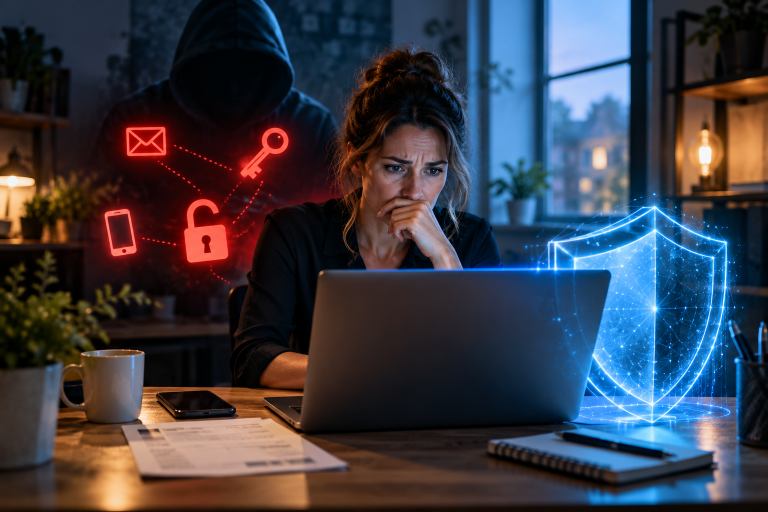
The answer is uncomfortable but simple: attackers stopped attacking systems a long time ago. Today, they attack the people who use them. A fake invoice that looks exactly like one from a regular supplier. A phone call from a friendly “IT technician” who just needs a quick password to fix a problem. An email from the “boss” asking for an urgent payment before the end of the day. None of these attacks are technically complex. All of them are devastatingly effective.
This matters especially for small and medium-sized businesses. Large corporations can afford strong security teams and expensive tools. Most SMEs cannot — and attackers know it. That is why small companies are increasingly targeted: less protection, less training, and often no process for verifying unusual requests. One wrong click by one employee can be enough to cause damage that threatens the entire business.
The good news: this risk can be managed. Not with another product, but with people. In this article, we will look at why technology alone is not enough, which tricks attackers use most often, and how to turn your employees from your biggest vulnerability into your strongest line of defense.
Why Technology Is Not Enough
For a long time, companies believed that strong technical defenses were enough. They bought the best tools, encrypted their data, and updated their systems regularly. IT budgets grew every year, and security teams proudly presented their layers of protection: firewalls at the network border, antivirus software on every endpoint, intrusion detection systems, and regular penetration tests. On paper, everything looked safe. But while the technology got better, the attacks changed as well. Hackers realized that it is much faster and cheaper to manipulate a person than to fight a machine. Breaking through modern encryption or finding a hidden vulnerability in a well-maintained system requires time, money, and rare expertise. Sending a convincing email to a stressed employee requires none of these things.
This is the uncomfortable truth that many organizations learn too late: every technical security measure depends on the person using it. A complex password policy is useless if an employee writes their password on a sticky note and attaches it to the monitor. Multi-factor authentication is bypassed when a user approves a login request they did not initiate, simply because the notification appeared on their phone and seemed annoying. Encryption cannot protect data that an employee willingly sends to the wrong recipient. The chain of security is only as strong as its weakest link — and in most companies, that link is not a piece of software, but a human decision made in a hurry.
It is also important to understand that attackers are rational. They choose the path of least resistance. If a company invests heavily in technical defenses, hackers simply move to the next possible entry point: the receptionist who answers every call politely, the accounting employee who processes payment requests quickly, or the new team member who is too afraid to question an unusual instruction from a “manager.” Social engineering attacks scale perfectly. One well-written phishing email can be sent to thousands of employees at once, and only one single click is needed for the attack to succeed. No firewall in the world can stop an employee from voluntarily opening the door.
Does this mean that technology is useless? Absolutely not. Firewalls, encryption, and security updates remain necessary and valuable — they raise the cost and effort for attackers and stop many automated threats every day. The real problem is not the technology itself, but the belief that technology alone is enough. Security must be seen as a combination of two elements: strong technical defenses and alert, well-trained people. One without the other creates dangerous gaps. True cybersecurity starts when companies understand that their employees are not a weak point to be ignored, but a critical part of the defense system that needs the same attention, investment, and care as the technology itself.
The Art of Social Engineering
Social engineering is often called the art of human hacking — and the name fits perfectly. While a traditional hacker searches for weaknesses in code, a social engineer searches for weaknesses in human psychology. The basic idea is simple: instead of breaking into a system, the attacker manipulates a person into giving them access. No programming skills are required, no expensive tools, and no deep technical knowledge. What is required is an understanding of how people think, how they react under pressure, and how easily trust can be exploited.
What makes social engineering so effective is that it does not attack machines — it attacks emotions. Professional attackers rely on powerful psychological principles that work on almost everyone. One of these principles is urgency: messages that demand immediate action, such as “Your account will be closed in one hour” or “The payment must be made today.” Urgency pushes people to act quickly instead of thinking carefully. Another principle is authority: people tend to follow instructions when they appear to come from a boss, a government agency, or the IT department. A third principle is helpfulness — most employees genuinely want to support their colleagues and clients, and attackers exploit exactly this willingness to help. Finally, there is curiosity and fear: a subject line like “Your contract has been updated” or “Unusual login attempt detected” creates a strong emotional reaction that makes people click before they think.
Before an attack begins, criminals usually invest time in research. They study their targets carefully, collecting information from LinkedIn profiles, company websites, social media posts, and public databases. This phase is called reconnaissance, and it is what separates amateur scammers from professional attackers. By knowing an employee’s name, job title, recent projects, and even their colleagues’ names, attackers can create messages that look completely legitimate. An email that mentions the correct project, uses the right internal terminology, and appears to come from a real manager is almost impossible to distinguish from a genuine message. This targeted form of attack is known as spear phishing, and it is far more dangerous than generic spam because it is personalized and carefully prepared.
A typical phishing email, for example, looks like it comes from the CEO or a trusted partner. It often contains urgent language like “Transfer this payment immediately” or “Please keep this confidential — do not discuss it with anyone.” The instruction to stay silent is a clever trick: it prevents the employee from asking colleagues for advice, which would likely expose the fraud. In the stress of a busy workday, many employees do not stop to question such messages. They want to be efficient, they do not want to annoy their boss, and they do not want to appear incompetent. Attackers count on exactly this behavior. The human brain under pressure is not a security system — it is a predictable target.
The Most Common Tricks Attackers Use
Hackers have developed many creative methods to exploit human trust, and each method is designed for a specific situation. Understanding these techniques is the first step toward recognizing them in real life.
Phishing remains the most widespread technique of all. Attackers send emails that appear to come from banks, delivery services, well-known companies, or internal departments. These messages usually contain a link or an attachment and a reason to click: an invoice to check, a package that could not be delivered, or a document that needs a signature. The link leads to a fake website that looks identical to the real one. When the victim enters their login data, the attacker captures it immediately. Phishing works because the emails look professional, use real company logos, and create just enough pressure to make people act without thinking. Millions of these messages are sent every day, and they cost organizations enormous amounts of money.
A more targeted variation is spear phishing. Instead of sending thousands of generic emails, attackers focus on one specific person or department. They research the victim’s role, projects, and relationships within the company, and then craft a message that fits perfectly into the daily workflow. An accountant might receive a fake message from a “supplier” with an updated bank account number. An HR employee might receive a “job application” containing a malicious file. Because these messages are personalized, traditional spam filters often fail to detect them, and employees are far more likely to trust them.
Vishing — voice phishing — moves the attack from the inbox to the telephone. In this scenario, criminals call employees directly and pretend to be from the IT helpdesk, Microsoft support, the bank, or even the police. They speak confidently, use technical vocabulary, and create pressure: “We have detected suspicious activity on your account. Please provide your access code so we can secure it.” Many employees are not used to questioning a friendly voice on the phone, especially when the caller seems professional and well-informed. In some cases, attackers combine vishing with phishing: first they send an email, then they call to “help” the employee with the problem mentioned in the email — gaining trust step by step.
Pretexting goes even further. The attacker invents an entire scenario, a so-called pretext, and plays a convincing role. For example, they might pretend to be a new employee who has lost their access badge, a technician who needs to check the server room, or an auditor who requires access to confidential documents. Good pretexting requires preparation, acting skills, and detailed knowledge about the company. When done well, employees help the attacker voluntarily — holding the door open, sharing information, or even handing over devices.
One of the most expensive attack types is Business Email Compromise (BEC). In this scheme, criminals either hijack a real executive’s email account or create a nearly identical fake address. They then send instructions to employees in the finance department: “Please process this payment today — the supplier has changed their bank details.” Because the message appears to come from the CEO or a senior manager, employees often follow the instruction without verification. Single BEC attacks have caused losses of millions, and they are particularly dangerous because no malware is involved — the victim simply makes a legitimate payment to the wrong account.
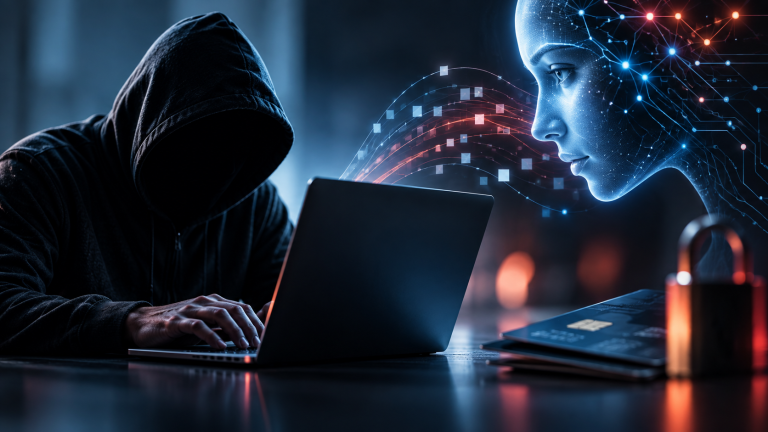
A newer and rapidly growing threat is the use of artificial intelligence. With modern AI tools, attackers can clone a person’s voice from just a few seconds of audio taken from a video, podcast, or voicemail. Deepfake voice calls are already being used to impersonate CEOs instructing employees to transfer money urgently. Video deepfakes are also becoming more realistic. A “video call” in which a fake CFO or manager asks for sensitive information may soon be difficult to distinguish from reality. This development means that hearing or even seeing someone will no longer be proof of their identity — verification through independent channels will become essential.
Real-World Examples
These attacks are not rare exceptions — they are happening right now, at a massive scale. The numbers tell a clear story. According to the annual Data Breach Investigations Report by Verizon, the human element was involved in about 62 percent of all data breaches in 2025 — including phishing, stolen credentials, simple human error, and misuse of access. That means nearly two out of three breaches did not happen because a firewall failed or a server was technically vulnerable. They happened because a person was manipulated or made a mistake. Other industry reports show similar results year after year, proving that this is not a temporary trend but a permanent reality of modern cybercrime.
The financial damage is equally shocking. The FBI’s Internet Crime Complaint Center (IC3) reported that Business Email Compromise alone caused more than 3 billion US dollars in losses in 2025, with almost 25,000 reported complaints in the United States — an increase compared to the previous year. And these numbers only include cases that were actually reported to the authorities. Many companies stay silent about such incidents out of embarrassment or fear of damage to their reputation, so the true numbers are likely much higher. Between 2013 and 2023, the cumulative exposed losses from BEC worldwide reached an estimated 55 billion dollars — a sum that makes clear how profitable this type of attack has become for organized criminal groups.
Individual cases show how dramatic these attacks can be in practice. One of the most famous examples happened in Hong Kong in 2024: an employee of a multinational company attended a video conference call with several “colleagues” and a “chief financial officer.” Every person on the call was a deepfake — AI-generated video and audio. The employee was instructed during the meeting to transfer a total of 25 million US dollars to several bank accounts. Trusting the familiar faces on the screen, the employee complied. No alarm system went off, no malware was detected, and no technical security control was triggered. The attack succeeded purely through the manipulation of human trust.
Smaller companies often suffer even more from these attacks. While large corporations can sometimes absorb a six-figure loss, a single successful BEC attack can threaten the survival of a small or medium-sized business. And smaller organizations are frequently more vulnerable in the first place: they have smaller IT budgets, less time for employee training, and often no dedicated security staff. Attackers know this very well and deliberately target smaller suppliers and partners, using them as an entry point into larger companies as well. The lesson from all of these incidents is always the same: the attack did not succeed because the technology failed. It succeeded because a person was convinced to help the attacker — often without even realizing it.
In this video, I reveal why the strongest security in 2026 begins long before any tool reacts — and why awareness, habits, and decision-making are now the true frontline of defense. You’ll get a clear, practical breakdown of what really protects your business: not complicated software, not expensive systems, but the ability of your team to recognize and stop threats before they even reach your network.
How to Turn Your Employees into a Human Firewall
The good news is that human risk can be managed — and dramatically reduced. Organizations that take social engineering seriously do not just accept the problem; they actively build a defense system in which every employee becomes a human firewall. This transformation does not happen overnight, and it does not happen with a single email or a yearly presentation. It requires a combination of training, processes, technology, and culture — all working together.
The foundation of this defense is regular and practical security awareness training. Employees need to learn how to recognize suspicious emails, unexpected attachments, and unusual requests. But training should not be a boring, one-time event that people forget the next day. It must be continuous, interactive, and connected to real situations from the daily work routine. Short training sessions throughout the year work much better than one long seminar. Ideally, training is supported by simulated phishing tests: employees receive harmless but realistic fake phishing emails, and those who click receive immediate, friendly feedback instead of punishment. These simulations are not about catching people — they are about creating learning moments in a safe environment. Studies show that organizations which run regular simulations see their click rates drop significantly over time.
Training alone, however, is not enough — it must be supported by clear processes and verification rules. One of the most effective measures is the mandatory verification of sensitive requests. Every payment request, every request to change bank details, and every demand for confidential data must be confirmed through a second, independent channel. For example, if an email supposedly from the CEO asks for an urgent transfer, the employee calls the CEO’s office using a known phone number — not the number in the email. This simple rule, consistently applied, would have stopped many of the multi-million-dollar fraud cases described earlier. Verification procedures must be written down, known to everyone, and supported by management so that employees never feel rude or disloyal when double-checking a request, even from their boss.
Technology can support these human defenses as well. Modern email security gateways filter many phishing messages before they reach the inbox. Tools that warn employees about external senders, unusual domains, or newly registered links add an extra layer of protection. Report buttons integrated directly into the email client make it easy for employees to flag suspicious messages with a single click. However, it is important to understand that these tools are helpers, not replacements for human judgment. The goal is to support employees, not to create the illusion that technology will catch everything.
Finally, it is worth remembering that this effort pays off. Employees who are trained, supported by clear procedures, and encouraged to speak up do not remain the weakest link — they become the strongest defense. An alert employee who stops one fraudulent payment or reports one suspicious email can save the company millions. In a world where attackers target people rather than systems, your people are your most valuable security asset. The question is not whether you can afford to invest in them — it is whether you can afford not to.
Conclusion: Social engineering attacks on your employees
Social engineering attacks are no longer a rare or unusual threat. They have become a common way for cybercriminals to target businesses. Instead of trying to break through complex security systems, attackers often target the people using them. A convincing email, a phone call from a supposed manager, or even a fake video call can be enough to gain access to sensitive information or company systems.
The good news is that your employees do not have to be the weakest link. With the right knowledge, clear security procedures, and regular training, they can become an important part of your defense. Employees should know how to recognize suspicious requests, verify unusual instructions, and report mistakes without fear of blame.
The strongest security system is only as strong as the people using it. Make your employees part of your cybersecurity strategy, because the next attack may not try to break through your systems. It may simply try to convince someone to let it in.
Hello, I'm Cordula, founder of CyberSecureGuard. The WannaCry ransomware attack sparked my interest in cybersecurity and showed me how quickly cyber threats can affect businesses. Today, I help SMEs stay safe online—no tech jargon, just practical advice that works. Through CyberSecureGuard, I share simple, real-world guidance to help protect your business from cyber threats.